
Afghanistan’s saffron industry is experiencing another year of strong growth, reinforcing the status of Herat’s famous crop as one of the country’s most successful export products and a rare economic success story amid continuing challenges.
Known internationally as Afghanistan’s “Red Gold,” saffron exports increased significantly in 2025 as global demand continued to rise for the country’s premium-quality spice. Traders and industry representatives say superior quality, strong international recognition, and expanding demand in overseas markets have driven the latest growth.
According to figures from the Herat Chamber of Commerce and Investment, Afghanistan exported more than 22 metric tons of saffron during the first nine months of 2025. The exports generated over $30 million in revenue, representing an increase of approximately 10 percent compared with the same period last year.
Most Afghan saffron was shipped to Europe, North America, the Gulf region, and Central Asia. India, Spain, Saudi Arabia, the United Arab Emirates, the United Kingdom, Canada, and Türkiye remain among the largest buyers of the product.
Afghan saffron has repeatedly received international recognition for quality. Its distinctive aroma, deep color, and high purity have enabled it to compete successfully with major global producers. International taste-testing organizations, including institutions in Belgium, have on several occasions ranked Afghan saffron among the finest in the world.
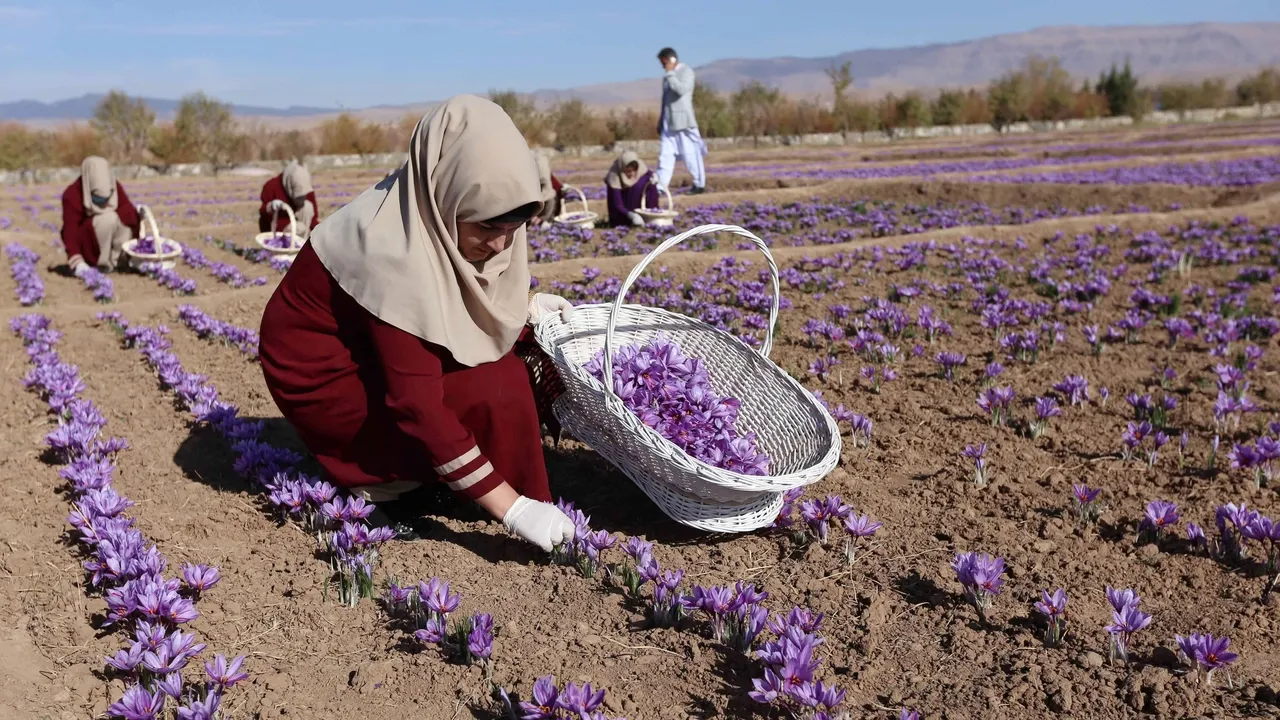
The center of production remains Herat province, particularly the districts of Ghoryan, Guzara, Injil, and Pashtun Zarghun. Every harvest season, thousands of farmers and seasonal workers participate in the collection and processing of saffron flowers across the province.
Current estimates indicate that nearly 12,000 hectares of land across Afghanistan are dedicated to saffron cultivation. More than 10,500 hectares are located in Herat alone, making the province the undisputed hub of the country’s saffron industry.
Beyond export earnings, saffron plays an important social and economic role in rural communities. Thousands of women are employed in harvesting, cleaning, sorting, and primary processing activities. For many households, saffron income provides a critical source of financial stability and employment.
Despite the industry’s achievements, challenges remain. Climate change, water shortages, increasing international competition, limited marketing capacity, and the absence of a globally recognized Afghan saffron brand continue to restrict the sector’s full potential.
Nafisa Danish, head of the Herat Saffron Union, said a portion of Afghan saffron is purchased by foreign traders and later sold in international markets under other national labels. She warned that this practice prevents Afghanistan from fully benefiting from the reputation and value associated with its own product.
The issue highlights a broader challenge facing Afghanistan’s export economy. While the country has succeeded in producing a globally competitive agricultural product, it still struggles to capture the highest levels of value within international supply chains. Branding, packaging, certification, and direct market access remain weak points compared with leading agricultural exporters.
The growth recorded this year nevertheless demonstrates the resilience of Afghanistan’s saffron industry. At a time when many sectors of the economy continue to face uncertainty, saffron has emerged as one of the few products capable of generating foreign currency, creating rural employment, and strengthening Afghanistan’s presence in global markets.
For Afghanistan, saffron represents more than an agricultural commodity. It has become a symbol of economic diversification, rural opportunity, and export potential. Whether the industry can move beyond supplying raw products to building a globally recognized Afghan brand may determine how much of the sector’s future value remains inside the country.