
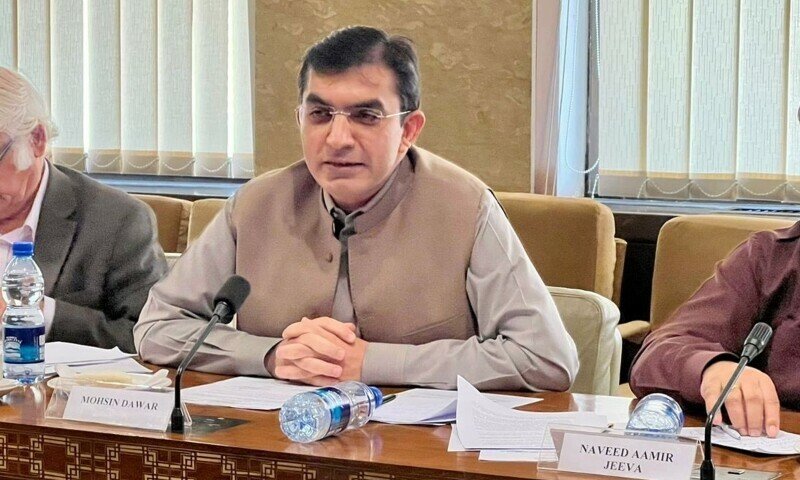
Pakistani politician Mohsin Dawar has described the Taliban as an “authoritarian” group imposed on the people of Afghanistan, arguing that the group does not represent the country’s political will.
Speaking exclusively to Afghanistan International, Dawar said the Pakistan-based Pashtun Tahafuz Movement had opposed the 2020 Doha Agreement from the outset, warning that the deal would weaken and eventually lead to the collapse of Afghanistan’s republican system.
Dawar said the Taliban’s return to power does not give the group a mandate to represent the political will of Afghans. He also argued that the Taliban’s system of governance is incompatible with Afghanistan’s social and cultural structure.
The Pakistani politician further claimed that Taliban policies have dealt a major blow to Afghan identity and nationalism. In his view, one of the objectives of the group’s rise to power has been to place pressure on the political identity and national consciousness of Afghans.
Dawar linked the issue to longstanding tensions between Pakistan and Afghan nationalism, as well as Pashtun nationalism on both sides of the Durand Line. He said these tensions have existed since the establishment of Pakistan.
He also alleged that Pakistan has gained both financial benefits from the Taliban’s existence and strategic advantages by using the group to weaken Pashtun nationalism on both sides of the Durand Line.
Dawar’s comments come amid continued debate over Pakistan’s role in Afghanistan and Islamabad’s complex relationship with the Taliban. Pakistan has historically maintained significant political and security interests in Afghanistan, while relations between the two sides have also faced growing tensions.
The claims made by Dawar about Pakistan’s motives and the Taliban’s political legitimacy represent his assessment and have not been independently verified by NIMRUZ TV.