
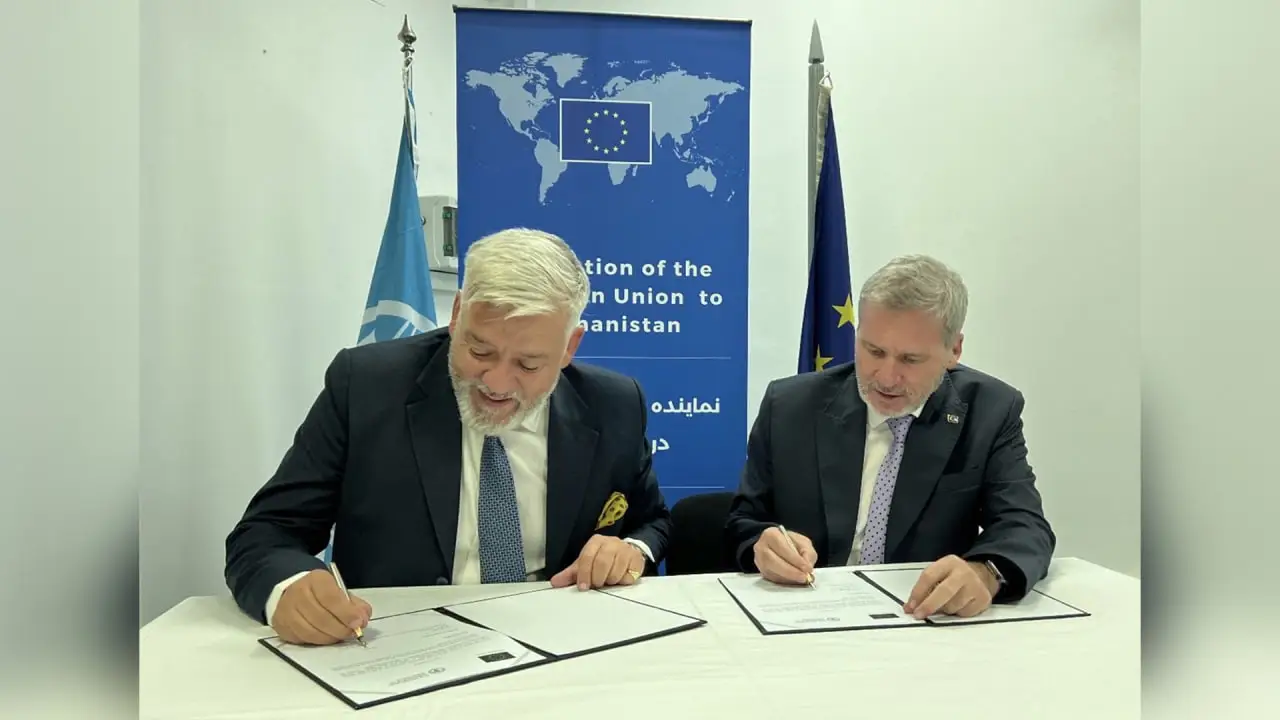
The European Union and the United Nations Food and Agriculture Organization have launched a €5 million project to support farmers and agribusinesses in Afghanistan, combining livelihood assistance with efforts to make the country’s agricultural sector more resilient to climate-related shocks.
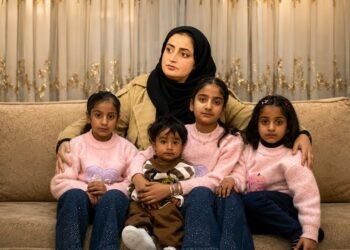
The EU and FAO said Sunday that the project will support vulnerable households, including returnees, internally displaced people and host communities, in districts facing food and nutrition insecurity, climate risks and limited economic opportunities.
The initiative will establish advisory centers to give farmers access to climate analysis and early-warning information. The aim is to help farmers make more timely decisions about production and marketing as weather conditions change.
The project also plans to restore 2,000 hectares of degraded forests and rangelands and support 250 nurseries managed by women and local communities.
In another component, matching grants will be provided to companies operating in the agriculture and food sectors, as well as environmentally sustainable businesses, to encourage investment and expansion.
Nicola Bloom, the European Union’s new chargé d’affaires for Afghanistan, said the EU’s support for FAO demonstrated its continued commitment to food security and the economic empowerment of Afghans.
Bloom said Afghanistan’s agricultural potential remains underused and identified the country’s severe vulnerability to climate change as one of the obstacles preventing that potential from being fully realized.
Richard Trenchard, FAO’s representative in Afghanistan, said the organization is moving from predominantly humanitarian programs toward more sustainable approaches. He said Afghanistan’s agriculture and food businesses retain the potential to grow, create jobs and connect farmers to markets despite difficult conditions.
“When farmers can produce with confidence, businesses can grow and products can reach markets, agriculture becomes a powerful engine for recovery and resilience,” Trenchard said.
The project comes as Afghanistan’s agricultural sector faces overlapping pressures from economic hardship, food insecurity, drought, changing weather patterns and other climate-related risks. Its significance therefore extends beyond providing financial assistance to individual farmers. The program is designed to strengthen production capacity, improve access to market information and help communities adapt to increasingly unpredictable climate conditions.
From Nimruz’s perspective, one of the most important aspects of the initiative is its attempt to connect humanitarian support with longer-term economic capacity. If farmers can obtain reliable climate information, businesses can access investment and agricultural products can reach markets more effectively, the benefits could extend beyond individual households to the wider rural economy.
The project could also help reduce some households’ dependence on humanitarian assistance if it succeeds in creating sustainable agricultural income and employment. But its longer-term impact will depend on implementation: whether vulnerable farmers can actually access the support, whether private investment follows, and whether local businesses can remain viable after project funding ends.
The central test will therefore be whether the €5 million investment produces lasting productive capacity rather than only short-term relief. For Afghanistan’s rural economy, the difference could determine whether external funding strengthens resilience or simply delays the effects of the next economic or climate shock.