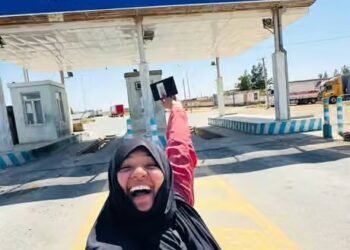

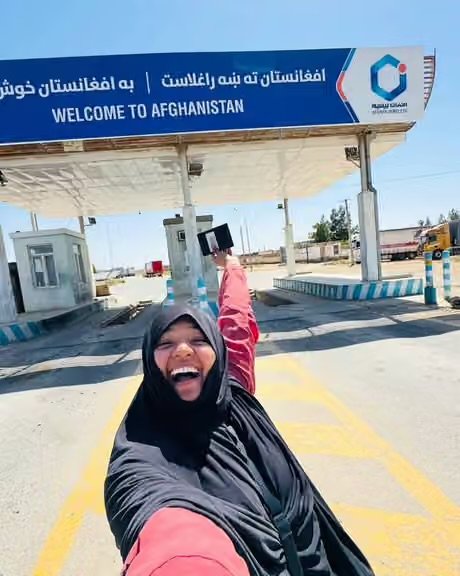
An Indian woman traveling alone in Afghanistan says Taliban forces stopped her in Bamyan and threatened to arrest her because she was traveling without a male companion, according to her own account.
Arunima IP, an Indian travel creator who says she has been traveling independently across different countries for about six years, appealed to the Indian Embassy for assistance on Tuesday. She later said the issue had been resolved and that she was safe.
According to The Indian Express, Arunima entered Afghanistan last month and began her solo journey in the country on September 5. She said her presence in several parts of Afghanistan attracted public attention, particularly because relatively few women were visible in public places.
Arunima said she arrived in Bamyan on Monday evening in a cargo vehicle. After getting out, she said several Taliban forces approached her and asked to see her travel documents.
According to her account, the officials examined her passport and visa and told her that women were not permitted to travel alone and that separate permission was required to travel between provinces.
“I asked them to deport me from Afghanistan, but they said I had violated the rules and would arrest me,” she said, questioning what she had done wrong by traveling alone as a woman in a country where women were not permitted to travel without a male companion.
Arunima said she remained under intense stress for several hours and feared for her life. She later announced that the situation had been resolved after she sought assistance from the Indian Embassy and that she was now safe.
Her account has not been independently verified by other sources, and Taliban officials have not publicly commented on the reported incident or explained the legal basis for the alleged detention threat. The claims should therefore be understood as the tourist’s account of what happened rather than as independently established facts.
The episode nevertheless draws attention to the practical impact of restrictions on women’s movement in Afghanistan. For foreign women accustomed to traveling independently, encountering restrictions tied to the presence of a male companion can create uncertainty over where they can travel and what rules they are expected to follow.
The incident also carries particular significance because it reportedly occurred in Bamyan, one of Afghanistan’s best-known tourist destinations. Foreign tourism depends not only on physical security but also on predictable rules and the ability of visitors to move between destinations without unexpected restrictions.
From the perspective of Nimruz, the case illustrates a broader challenge for Afghanistan’s tourism sector: even when foreign visitors are able to enter the country, unclear or restrictive rules governing women’s movement can affect their experience and influence how Afghanistan is perceived as a travel destination.
For now, the central facts remain limited to the tourist’s account and her statement that the dispute was resolved with help from the Indian Embassy. Further comment from Taliban authorities or independent confirmation of the circumstances would be needed to establish precisely what happened and what rules were applied.