

US Secretary of War Pete Hegseth has described the 2021 withdrawal from Afghanistan as a disaster for America’s credibility, calling for an unfiltered examination of the military and strategic failures surrounding the operation.
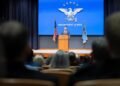
Speaking on Monday, November 9, at the US Naval War College, Hegseth accused American military educational institutions of avoiding serious assessments of recent strategic failures, including the withdrawal from Afghanistan. He claimed that some instructors regard such subjects as politically sensitive or controversial and therefore avoid examining them in depth.
“Five years ago, America was humiliated in Kabul, and every enemy of the United States around the world was watching,” Hegseth said. He also questioned why senior US commanders had failed to anticipate the collapse of the Afghan government and why American operational plans had unravelled within days.
Referring to the suicide bombing at Abbey Gate outside Kabul airport during the evacuation, Hegseth said operational, strategic and political failures had contributed to the deaths of 13 American service members. He argued that military colleges owed those who served in the 20-year Afghanistan war an honest and comprehensive assessment of the country’s performance.
Hegseth also criticised the previous US administration, placing particular blame on the management of the withdrawal under President Joe Biden. He questioned the performance of former Defence Secretary Lloyd Austin and criticised Congress for its handling of accountability among officials involved in the operation.
US forces withdrew from Afghanistan in August 2021, during Biden’s presidency. As American and international troops departed, the Afghan government collapsed and the Taliban returned to power, bringing an end to the Western-backed political order established after the 2001 intervention.
Hegseth’s remarks form part of a broader push to change how US military institutions teach strategy and assess past operations. His demand for a candid review raises an important question: whether the lessons of Afghanistan will be examined through a comprehensive institutional assessment or remain largely part of a political dispute over who was responsible.
A serious review would need to examine decisions made across successive administrations, military planning, intelligence assessments, the withdrawal agreement and the conditions that led to the Afghan government’s collapse. Assigning responsibility solely through political criticism risks overlooking the wider strategic failures that shaped the outcome.