
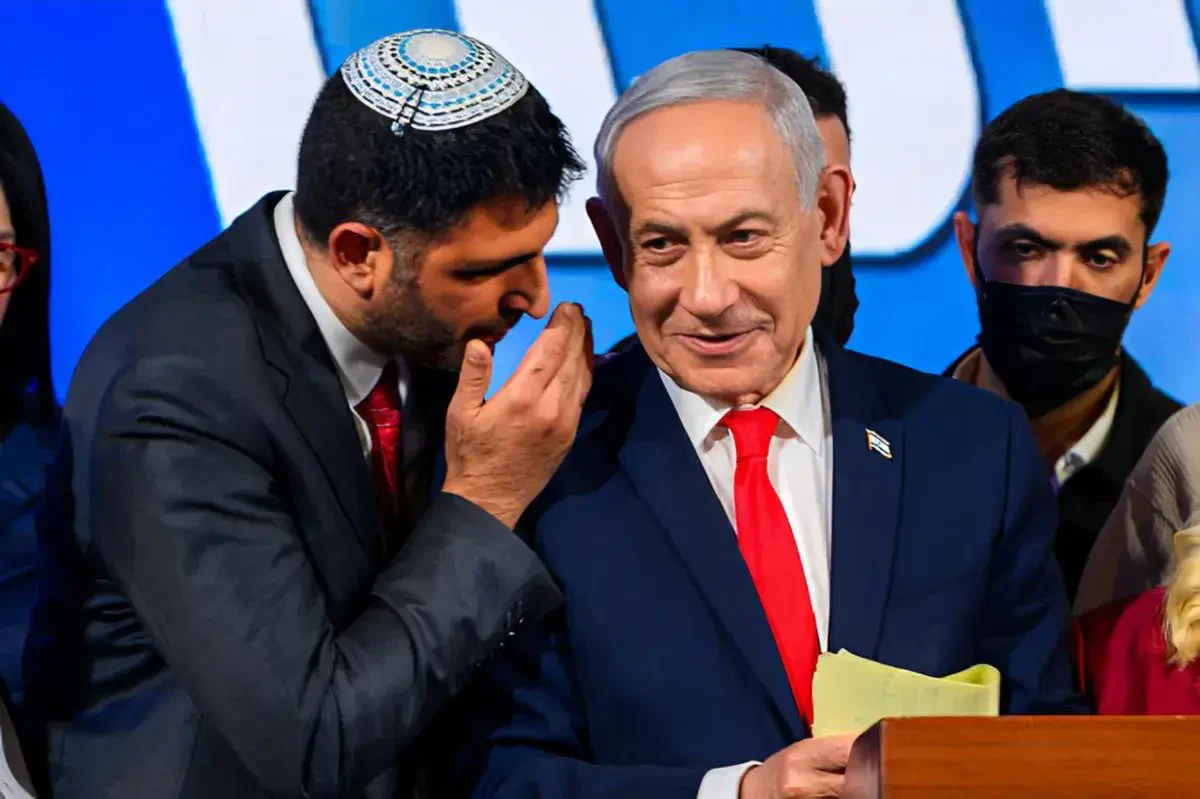
Israeli Prime Minister Benjamin Netanyahu’s political bloc has secured 53 seats in the parliamentary election, leaving it eight seats short of the majority needed to form a government, as rival parties face difficult coalition negotiations.
According to results announced by Israel’s Central Elections Committee, the distribution of seats remained unchanged after the remaining votes were counted. Netanyahu’s bloc holds 53 seats, the opposition camp has 48, and Arab parties have secured a combined 19 seats in the 120-member Knesset.
A government requires the support of at least 61 lawmakers. Neither of the two main political camps has secured enough seats independently, giving Arab parties potential influence over negotiations. The final official results are expected to be submitted to President Isaac Herzog after complaints and other possible issues have been reviewed.
Arab Parties Signal Willingness to Cooperate
The Joint List of Arab parties has expressed readiness to cooperate politically to end Netanyahu’s premiership. Its leader, Yousef Jabareen, has stressed the importance of cooperation between Jewish and Arab citizens of Israel.
The Joint List won 11 seats, while the Ra’am party secured eight. The Joint List has previously indicated that it could support an alternative government led by Netanyahu’s opponents without formally joining the cabinet.
Such support would depend on progress on issues affecting Arab communities, including tackling violent crime, halting home demolitions and advancing a political path toward the establishment of a Palestinian state.
However, Gadi Eisenkot, leader of the Yashar party and a prominent Netanyahu opponent, has previously rejected forming a government dependent on Arab party support. Yair Golan, leader of the Democrats, has taken a different position, urging opposition parties to cooperate with Arab lawmakers to bring about a change of government.
Divisions Within the Opposition
Disagreements among Netanyahu’s opponents are also complicating coalition efforts. The Times of Israel, citing Channel 12, reported that Avigdor Lieberman, leader of Yisrael Beiteinu, has not responded to calls from Eisenkot and Naftali Bennett, although members of their campaign teams remain in contact.
According to the report, Lieberman opposes joining a government led by Netanyahu as well as supporting one that relies on Arab party votes. He reportedly prefers Eisenkot to join a national unity government with Netanyahu.
The disagreements indicate that opposition to Netanyahu’s continued premiership has not yet translated into an agreement on an alternative governing coalition.
Likud Files Election Fraud Allegations
Netanyahu’s Likud party has accused Arab parties of widespread electoral fraud, alleging bribery, intimidation, violence and the use of prohibited software.
Israel’s Central Elections Committee confirmed that it had received Likud’s complaint and would examine it through its usual procedures for monitoring electoral integrity. The review does not, in itself, establish that the allegations are true.
Herzog Calls for Efforts to Avoid Another Election
President Isaac Herzog has urged political parties to approach coalition negotiations with an open mind and make efforts to prevent another election.
After the official results are submitted, Herzog is expected to consult party leaders before assigning a candidate to form the next government. If that candidate fails to assemble a coalition, the political process could be prolonged and potentially lead to another election.
Meanwhile, US President Donald Trump told Axios that Netanyahu was in a “relatively good” position, contrary to some initial reports. Trump also said he had not yet decided whether to help facilitate the formation of a unity government.
Although vote counting has ended, Israel’s next government remains uncertain. Its formation will depend on whether the parties can overcome their political differences and secure the parliamentary support required to govern.