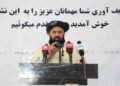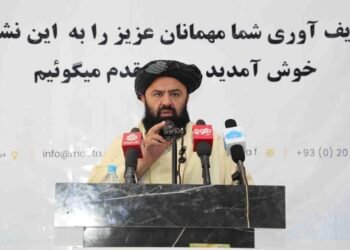


Anayatullah Shoja, a deputy minister for border affairs at the Taliban’s Ministry of Borders, Ethnicities and Tribes, has said that Afghans will one day save the world and that no force will then dare to stand against them.
Shoja made the remarks on Wednesday, November 11, during a public gathering in Parwan province. The Taliban ministry published excerpts of his speech in a report about a meeting titled “Implementation of Sharia Under an Islamic System and Coordination with the People.”
According to the ministry, Shoja said those who cooperated with “infidels” and encouraged people to become their servants had faced action from the population. He also urged families to encourage their children to pursue education so they could compete internationally in different fields.
His call for education comes against the backdrop of the Taliban’s restrictions on girls’ and women’s access to education since returning to power in August 2021. Girls remain barred from education beyond the sixth grade, while women have been prohibited from attending universities. These restrictions exclude a substantial part of Afghanistan’s population from formal education and limit the country’s ability to develop and compete in academic and professional fields.
The same gathering also featured remarks by Mohammad Ajan Rahbar, head of the ministry’s coordination department for jirgas and tribal affairs. He said that after what he described as the enemy’s defeat on the battlefield, efforts were now focused on confronting an “ideological war.” He urged people to remain alert against what he called enemy propaganda.
The Taliban describe their 20-year war against Afghan forces and the US-led international coalition as a victory. That conflict ended in August 2021 with the collapse of the republic and the withdrawal of US forces, followed by the Taliban’s return to power.
Shoja’s remarks highlight a contradiction between the Taliban’s stated ambition for Afghans to compete internationally and the restrictions imposed on girls and women. A country’s ability to contribute to global scientific, economic and professional progress depends on access to education and opportunities for its entire population. With girls excluded from secondary education and women barred from universities, that ambition faces a fundamental obstacle.
Afghanistan continues to confront the political, economic and social consequences of decades of conflict. Turning claims about national strength and global leadership into practical progress would require more than public declarations: it would require an education system open to all Afghans, including girls and women.