
Norwegian Refugee Council chief Jan Egeland has urged the Taliban to reopen schools and universities to Afghan girls and warned that continued restrictions on women’s education are gradually weakening the country’s future workforce.
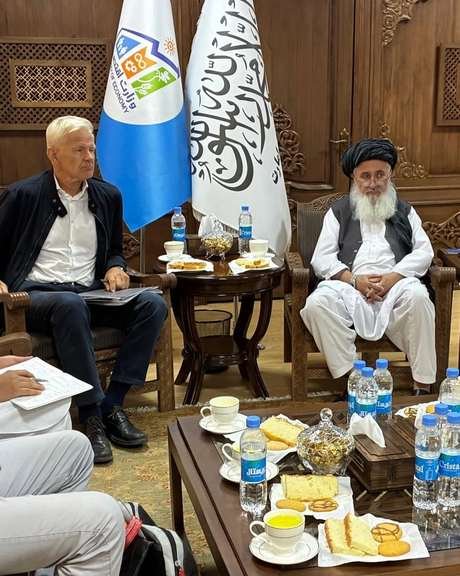
Egeland made the appeal on Thursday after meeting Taliban officials in Kabul and Kandahar. In a post on X, he said that each passing year sees thousands of female teachers and health workers leave Afghanistan’s labor market while there are no new graduates being trained to replace them.
He described the situation as a “serious concern” for Afghanistan and said the Norwegian Refugee Council would continue working to restore education for women and girls at all levels, “in accordance with Afghan traditions.”
Egeland also called on diplomats and foreign envoys to return to Afghanistan and work alongside humanitarian organizations to expand assistance to people in need and support the rights of women and girls.
“You cannot do this from outside,” he said.
The appeal comes as the Taliban continue to keep secondary schools and universities closed to girls and women despite sustained domestic and international calls for their reopening.
The Taliban have defended restrictions on women as consistent with their interpretation of Islamic law and Afghan culture, while rejecting what they describe as foreign interference in Afghanistan’s internal affairs.
The restrictions have also expanded into specialized health education. The Taliban have closed medical and nursing training programs to women, raising concerns about the future supply of female health workers in a country where women’s access to health services can depend on female medical staff.
Egeland’s warning therefore extends beyond the immediate loss of educational opportunities. The longer girls remain excluded from education, the smaller the pool of qualified women available to become teachers, health workers and other professionals in the future. At the same time, existing female professionals are gradually leaving the workforce, creating a gap that cannot easily be filled.
From Nimruz’s perspective, this is the longer-term consequence that makes the education ban particularly significant: the policy is not only restricting what Afghan girls can do today, but also reducing the number of qualified professionals Afghanistan will have tomorrow. In sectors such as education and health, where the loss of trained women directly affects the availability of services, the effects can extend well beyond the women and girls currently excluded.
Egeland’s call for foreign diplomats and envoys to return also reflects a broader debate over how the international community should engage with Afghanistan. Humanitarian organizations argue that direct presence inside the country is essential for reaching vulnerable communities and pressing for change. But continued restrictions on girls’ education make that engagement increasingly difficult, as international actors must balance immediate humanitarian needs with concerns about policies that are eroding Afghanistan’s human capital over time.
The central challenge is therefore not simply reopening classrooms. It is whether Afghanistan can maintain and rebuild the skilled workforce needed for its future while a large part of the next generation remains excluded from education.