
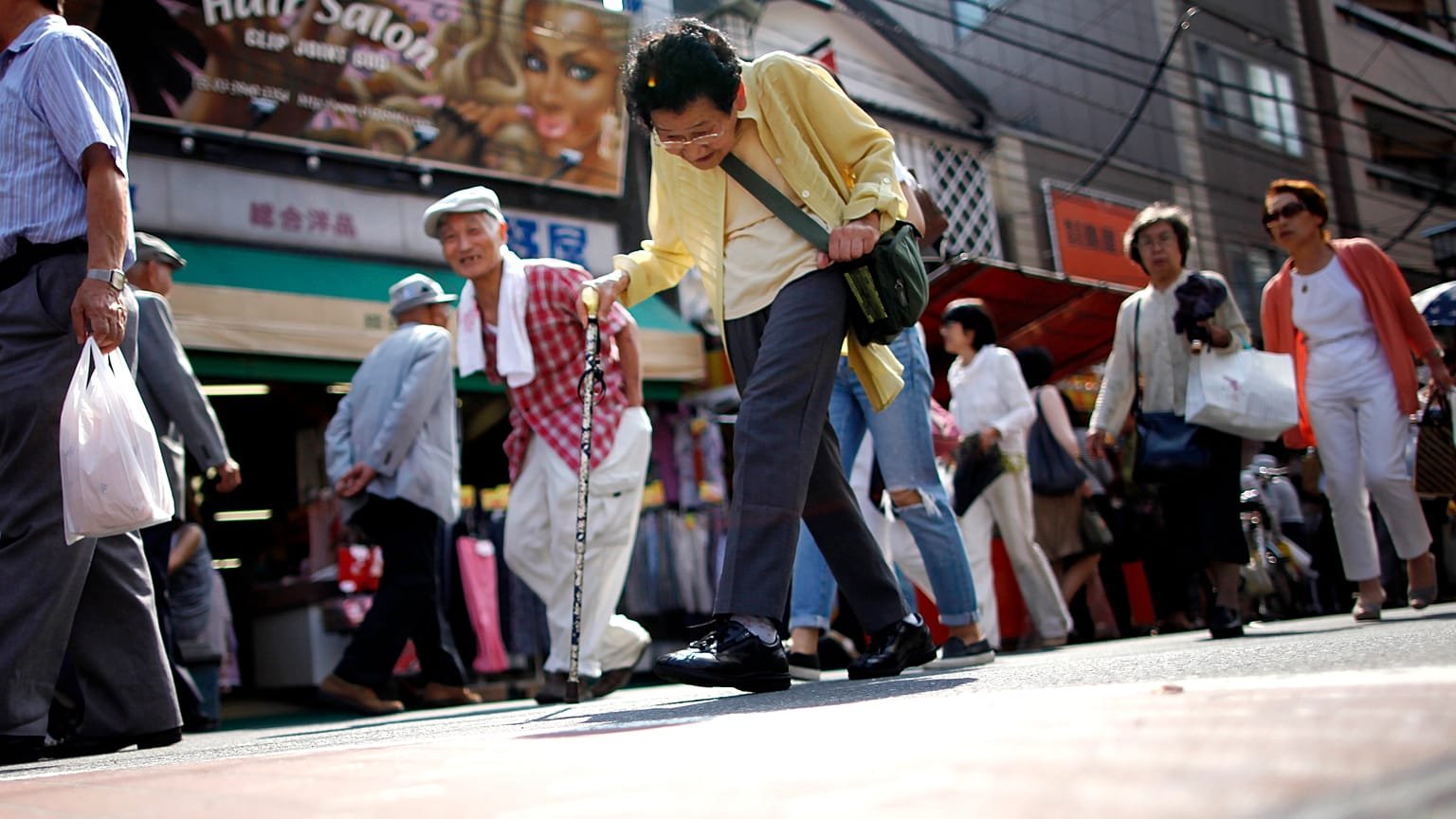
Japan’s population of people aged 100 and over has surpassed 100,000 for the first time, reaching 107,677, even as the country faces falling births, a shrinking workforce and mounting pressure on public services.
Japan’s Health Ministry said Tuesday that women account for about 88 percent of the centenarian population. Kishimoto Fuyu, aged 114, was identified as the country’s oldest woman, while Kato Hikaru, aged 112, was named the oldest man.
Japan’s health minister welcomed the growing number of people reaching old age while warning that a rapidly expanding elderly population is making it increasingly difficult to maintain public services on a sustainable basis.
The scale of the demographic transformation is striking. When Japan began officially recording the number of centenarians in 1963, there were just 153 people aged 100 or older. The figure reached 1,000 in 1981, 10,000 in 1998 and has now exceeded 100,000.
Nutrition and active lifestyles are often cited as factors contributing to Japan’s high life expectancy. Fish, vegetables and rice are common parts of the traditional diet, while many older people remain physically active through walking, cycling, using public transportation and other daily activities.
But the rise in longevity represents only one side of Japan’s demographic challenge. At the same time that the elderly population is expanding, the number of births is falling sharply.
Japan’s fertility rate stood at 1.14 children per woman last year, far below the roughly 2.1 level generally associated with maintaining a stable population over the long term without migration.
The consequences extend beyond population numbers. A smaller working-age population means fewer workers and taxpayers supporting a growing number of retirees, increasing pressure on pensions, healthcare and other public services.
Japan’s population could fall to around 87 million by 2070, according to projections cited in the report. People aged 65 and over already account for close to 30 percent of the population, and that share is expected to approach 40 percent by 2070.
The Japanese government has described the demographic trend as a “critical crisis.” Financial incentives and other measures designed to encourage people to have more children have so far failed to reverse the decline in births.
Migration has increased to some extent in recent years, but foreign nationals still make up only around 3 percent of Japan’s population, while resistance to significantly expanding immigration has also grown.
From the perspective of Nimruz, Japan’s centenarian milestone is therefore both a social achievement and a demographic warning. Longer lives reflect advances in health, living standards and social conditions, but longevity becomes an economic challenge when it is accompanied by fewer births and a shrinking pool of working-age people.
The central question for Japan is no longer simply how to help people live longer. It is how to sustain a society in which people are living longer while younger generations become smaller — and how to balance the needs of older citizens with the demands of employment, public finances and family support.
The latest figures were released ahead of Japan’s national Respect for the Aged Day, when the government traditionally recognizes people who reach the age of 100 with a congratulatory letter and a traditional sake cup.
Japan’s record number of centenarians thus captures a striking demographic paradox: the country is succeeding at extending human life while struggling to maintain the size of the generations that will sustain its economy and public services in the decades ahead.