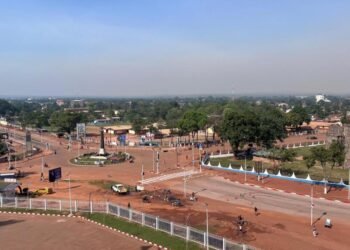

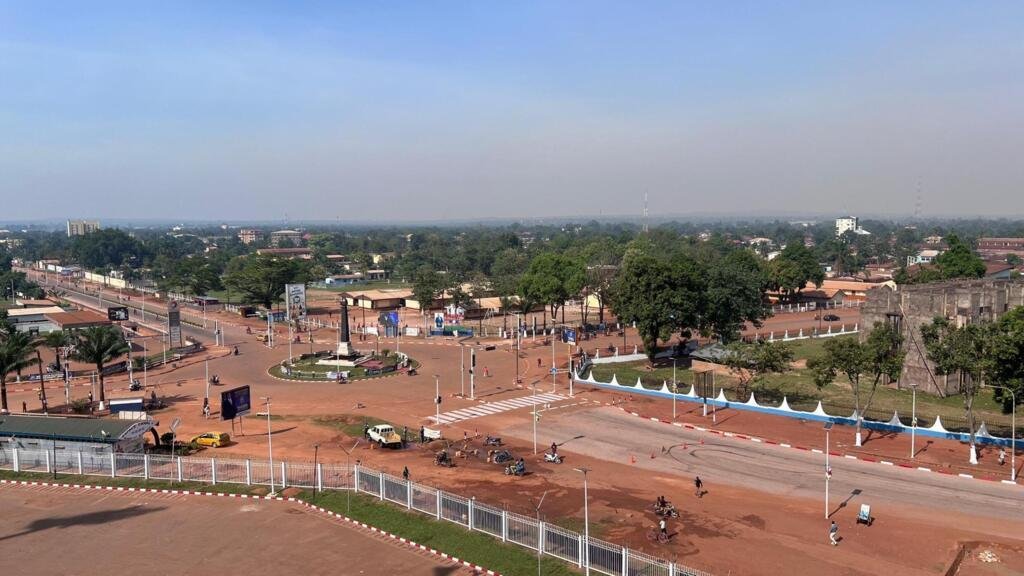
Bangui, the capital of the Central African Republic, experienced partial disruptions on Monday, October 12, 2026, after civil society organizations called for a “dead city” protest against a government increase in fuel prices. Government offices continued operating, while some educational institutions closed and movement became difficult in parts of the city.
The protest call was issued the previous week by a coalition of civil society organizations seeking to challenge the government’s decision to raise the prices of petroleum products. According to reports, the increase amounted to 150 Central African CFA francs. Government officials have defended the measure, citing the global fuel crisis and the state’s cash-flow difficulties.
The response in Bangui appeared uneven. The continued operation of government offices, alongside school closures and transport difficulties in some areas, suggests that the call had an impact in parts of the capital but did not bring the entire city to a standstill.
Fuel price increases can affect a wide range of daily expenses, particularly public transport, the distribution of goods and the operating costs of small businesses. For households already facing financial pressure, higher fuel costs can also make commuting and accessing essential services more expensive.
Civil society groups have used the protest call to express concern about the economic consequences of the government’s decision. However, the available report does not establish how many residents participated, how widely the disruption spread or whether the protest will prompt the authorities to reconsider the increase.
The situation highlights the challenge facing the Central African Republic’s government as it attempts to manage financial constraints while responding to public concerns about the cost of living. The extent to which the protest influences future policy will depend on public participation, the response of the authorities and whether further dialogue takes place over fuel pricing.
For Nimruz, the key issue is the effect of fuel costs on ordinary households and economic activity. While the partial disruption in Bangui signals dissatisfaction in some parts of the capital, the available information does not support describing the city as completely shut down or drawing conclusions about the overall scale of public opposition.