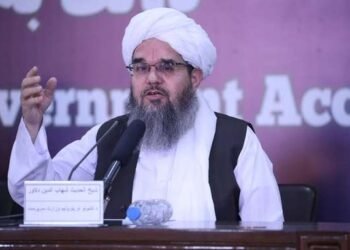

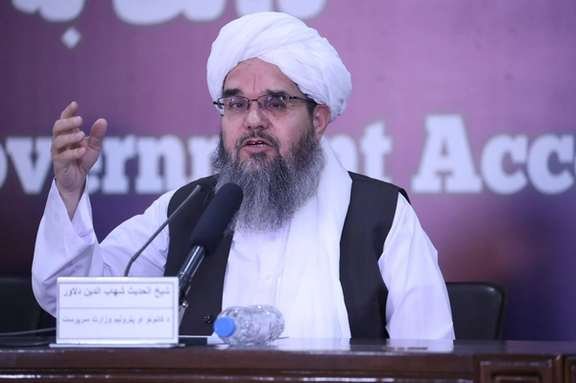
Shahabuddin Delawar, head of the Afghan Red Crescent Society under Taliban control and one of the group’s senior negotiators in the Doha talks, has defended the Taliban’s ban on girls’ education beyond the sixth grade, arguing that the word “women” does not appear in the Doha Agreement.
Speaking to Shamshad Television in Kabul, Delawar said: “The word women is not there from beginning to end.” He also cited what he described as cultural sensitivities within Afghan society, particularly among Pashtuns, saying that raising women’s issues in discussions can be difficult.
Delawar offered no specific explanation for why these cultural considerations should justify restrictions on girls’ education. He nevertheless defended the decree issued by Taliban leader Hibatullah Akhundzada, saying the ban on girls studying beyond the sixth grade would remain in place until a further order was issued.
His latest remarks contrast with statements he made during the Doha negotiations. At one of those meetings, Delawar said women had the right to study up to doctoral level and to work, adding that the Taliban would be committed to those rights. Around three years ago, he also expressed hope in several speeches that restrictions on girls’ education would be lifted.
Reports indicate that Delawar was later removed from his position at the Ministry of Mines and Petroleum and appointed head of the Afghan Red Crescent Society. However, an independent link between that personnel change and his statements on girls’ education has not been established.
Critics of the Taliban argue that attributing restrictions on women to Afghan and Pashtun traditions overlooks the role of political decisions and decrees issued by the group. Before the Taliban’s return to power, Afghan girls and women attended schools and universities, while women also held senior positions in government institutions.
The Doha Agreement’s failure to explicitly mention women does not, by itself, explain the full scope of restrictions imposed since the Taliban returned to power in 2021. The agreement’s wording and the Taliban’s subsequent policies are separate issues that must be examined independently.
Delawar’s comments highlight a continuing contradiction between assurances made during the peace negotiations and the restrictions now enforced by the Taliban. While his remarks describe the absence of an explicit reference to women in the agreement, they do not establish that the agreement required or justified the subsequent ban on girls’ education.
The central issue remains the Taliban’s own policy decisions and the continued exclusion of girls from education beyond the sixth grade, despite earlier statements by Taliban representatives about women’s rights to education and employment.