
Two years after Australia, Canada, Germany and the Netherlands launched a formal legal process over Afghanistan’s alleged violations of women’s rights, Afghan and international civil society groups are calling on the four countries to move the process forward and provide greater transparency about its status.
The initiative was announced in September 2024 under Article 29 of the Convention on the Elimination of All Forms of Discrimination Against Women, known as CEDAW. Afghanistan ratified the convention in 2003 and remains a party to it.
The four countries called on Afghanistan to comply with its obligations under CEDAW and address what they described as systematic violations of the rights of women and girls under Taliban rule.
The process is legally significant, but it did not mean that a case had already been filed at the International Court of Justice. Under Article 29, disputes must first pass through specified procedures, including an attempt to resolve the dispute through negotiations. If those efforts fail, arbitration can follow, with the possibility of referral to the International Court of Justice under the conditions set out in the convention.
Australian officials confirmed in late 2025 that the four countries had written to Afghanistan on several occasions seeking good-faith negotiations, describing negotiations as the first required step under the CEDAW dispute mechanism.
More recent statements from the German government have also said that the initial legal steps under Article 29 had been taken and that the four countries remained committed to pursuing accountability.
However, civil society organisations argue that public information about the progress of the process remains limited.
Rawadari, an Afghan human rights organisation, launched a campaign in September 2026 under the message “Accountability, not normalisation,” calling on Australia, Canada, Germany and the Netherlands to reactivate their commitment and take practical steps toward accountability.
Other rights organisations have similarly called for timely and transparent progress in the CEDAW proceedings. The German Institute for Human Rights has said that the process has been effectively stalled for almost two years and called for the negotiations to be declared unsuccessful so that an independent arbitration tribunal could be convened.
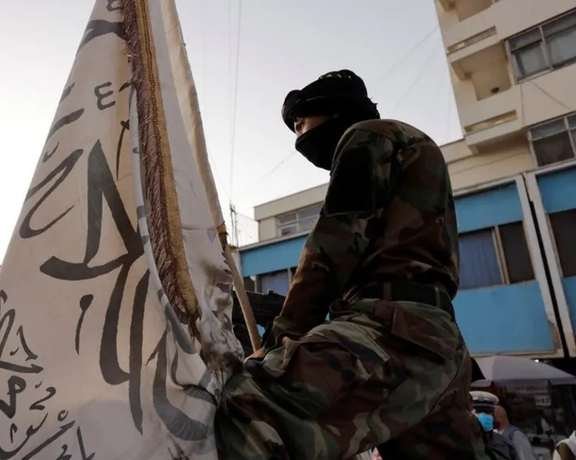
The calls come against the backdrop of continuing restrictions on women and girls in Afghanistan. International governments and human rights organisations have documented restrictions affecting education, employment, freedom of movement and participation in public life.
The Taliban’s so-called vice and virtue law, introduced in 2024, has also been widely criticized by international rights bodies and governments for imposing additional restrictions on women’s public presence, movement and expression.
Civil society groups have pointed to these continuing restrictions as evidence that the conditions that prompted the CEDAW initiative have not disappeared.
At the same time, Afghan women and civil society networks continue to pursue education, advocacy and documentation efforts despite restrictions and pressure. These initiatives have become an important source of information about conditions affecting women and girls inside Afghanistan.
The four countries’ position also carries a broader diplomatic dimension. Their CEDAW action does not constitute political recognition of the Taliban as Afghanistan’s legitimate government. Instead, the governments have emphasized that Afghanistan remains responsible for its international treaty obligations regardless of the political status of the de facto authorities.
The initiative has also attracted support from other countries. A joint statement issued in September 2024 said that more than two dozen additional states supported the initiative and were considering other possible accountability mechanisms under CEDAW and other relevant human rights frameworks.
The central question now is whether the four initiating states will move the dispute beyond negotiations and toward the next stages permitted under international law.
For the applicants, that could mean formally determining whether negotiations have produced results and, if not, considering arbitration in accordance with Article 29. A future case before the International Court of Justice would depend on the completion of the required procedural steps and the applicable jurisdictional conditions.
For Afghan civil society, however, the issue is not simply procedural. The groups pressing for action argue that prolonged uncertainty risks weakening the credibility of international accountability mechanisms at a time when restrictions on women and girls continue.
The CEDAW initiative therefore represents a test of how far states are prepared to use existing international legal mechanisms when diplomatic pressure has failed to produce measurable change. Two years after the initial announcement, the demand from civil society is increasingly focused on three issues: transparency about what has happened so far, clarity about the current legal stage, and a concrete explanation of what comes next.