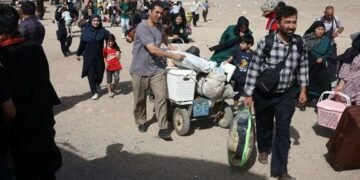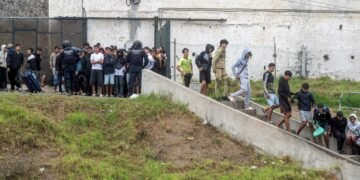

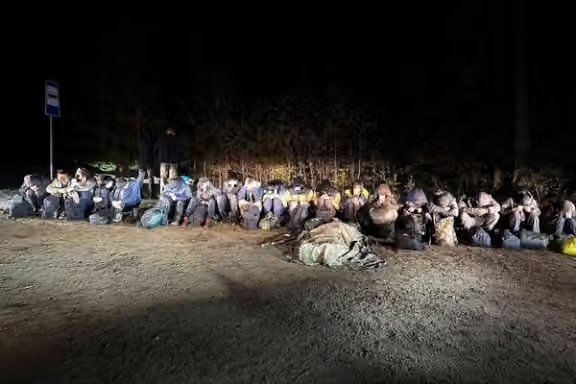
Lithuanian border guards have detained 35 migrants who said they were citizens of Afghanistan and Iraq after they crossed into Lithuania from Belarus, according to Lithuania’s State Border Guard Service.
The group was detected on Thursday evening in the Varėna district of southern Lithuania after a border surveillance system recorded the migrants inside the Čepkeliai nature reserve, close to the Belarusian border.
Lithuanian authorities launched a large-scale operation to locate the group. A border guard helicopter was used for aerial surveillance, while ground teams, special forces and service dogs searched the surrounding forest and marshland. Police also assisted the operation.
According to the Lithuanian border service, the migrants split into several groups after crossing the border. They were detained before they could move farther into Lithuanian territory.
All 35 detainees were men estimated to be between 20 and 30 years old. Eleven had identity documents, while the others were undocumented. The Lithuanian authorities said the group identified themselves as Afghan and Iraqi citizens.
The border service said the migrants did not resist during their detention. By Friday morning, 29 had been assessed and returned to Belarus under the applicable procedures. Questioning of five others was still continuing, while one migrant was taken to a medical facility after reporting a health problem.
Lithuania’s border authorities said they had prevented 1,661 people from entering the country irregularly from Belarus since the beginning of 2026.
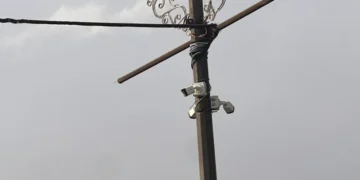
The incident took place in an area where Lithuania relies heavily on surveillance because the marshy terrain makes the construction of conventional border barriers difficult. The Čepkeliai reserve is one of the more challenging sections of the Lithuania-Belarus border for physical infrastructure.
The broader Lithuania-Belarus border has remained a focus of European security and migration policy. Lithuanian authorities have repeatedly described irregular migration through Belarus as a border-security challenge, while Lithuania is also pursuing stronger cooperation with European institutions on external-border protection.
From the Nimruz perspective, the detention is notable because the group included people identifying themselves as Afghan citizens and because the Belarus route remains one of the pathways used by migrants attempting to reach the European Union.
The Lithuanian authorities’ account confirms the detention and subsequent procedures, but the reported nationalities are based on the migrants’ own statements; identity documents were available for only 11 of the 35 people. Their individual asylum or migration claims will depend on separate assessments by the relevant authorities.
The case again illustrates the complex intersection of migration, border security and asylum procedures along the EU’s eastern external border, where people continue to attempt irregular crossings despite intensified surveillance and border controls.