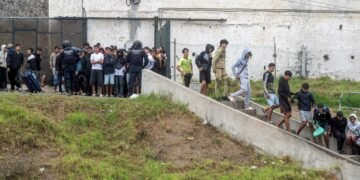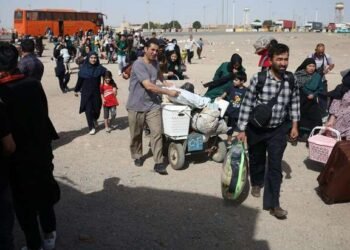

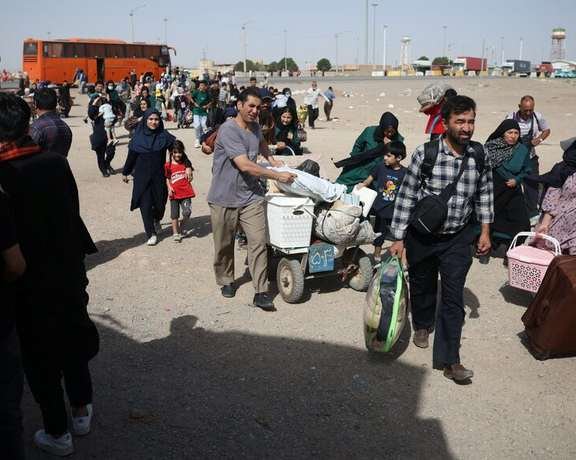
Millions of Afghans are returning to a country facing deep economic hardship, limited employment opportunities and declining international assistance, as deportations and other return movements from Iran and Pakistan continue to put pressure on families and communities.
In a report published by PBS News, correspondents traveled across Afghanistan and spoke with Afghans who had been deported from neighboring countries, documenting the difficulties they face after returning to a country many had left years or even decades earlier.
One of them is Amir, an Afghan man who told PBS he had lived in Iran for 20 years and supported himself through casual labor. After being arrested, he was deported to Afghanistan along with his sister, nephew and niece.
Amir said his return was not voluntary and that he arrived without a job, home or income. He told PBS that life in Iran at least gave him an opportunity to earn money and cover daily expenses.
The situation is particularly difficult for returnees who have spent most of their lives outside Afghanistan. Some arrive with limited knowledge of local conditions, weak social networks and little access to housing, employment or basic services.
The International Organization for Migration reported that approximately 6.5 million Afghan nationals had returned from Iran and Pakistan between mid-September 2023 and August 31, 2026. The organization said the scale and speed of the returns were creating major challenges for reintegration, particularly in access to livelihoods, housing, services and protection.
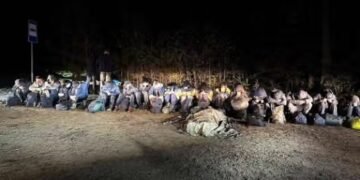
PBS also reported that some young Afghans continue attempting to travel back to Iran despite the risks, driven in part by the lack of economic opportunities inside Afghanistan.
Another Afghan returnee interviewed by PBS, a young man identified as Waheed, described being detained with five others after spending about eight hours walking through the desert while attempting to enter Iran. He said they were beaten for several hours after their detention.
The pressure is also being felt by families returning from Pakistan.
PBS reported on the case of Jamila, an Afghan mother who was deported with her nine children. She said the family had spent months moving between different locations in Pakistan because they feared arrest. According to her account, Pakistani police took her eight-year-old son after failing to find the adult men in the family, and she said the child was beaten.
Jamila’s 14-year-old daughter told PBS that she wants to return to school and eventually become a doctor, but that she no longer has the opportunity to continue her education after returning to Afghanistan.
The family also described severe material hardship, including periods when they went two or three days without food and had no house or tent in which to live after returning.
The humanitarian pressure is being compounded by funding shortages. UNHCR has warned that significant funding gaps are limiting the scale and scope of its response to the Afghanistan situation. The agency’s 2026 appeal calls for more than $450 million to support the Afghanistan situation, including protection and assistance for vulnerable Afghans and returnees.
The number of people returning has also continued to rise during 2026. UNHCR and IOM data show that more than 1.2 million Afghans had returned to Afghanistan during the year by late September, including more than 700,000 from Pakistan and more than 500,000 from Iran.
The scale of these movements creates pressure not only on returnees but also on communities expected to absorb them. Housing, employment, food assistance, health services, education and other basic needs are all affected when large numbers of people arrive within a short period.
For many Afghans, therefore, deportation does not necessarily mark the end of migration. Instead, it can begin another cycle of displacement, economic insecurity and attempts to find work or safety elsewhere.
From the Nimruz perspective, the central issue is the gap between the scale of returns and Afghanistan’s ability to absorb them. Millions of people have returned within a relatively short period, while the economy continues to struggle to provide sufficient jobs, housing and services.
The situation also illustrates how migration pressures are connected to Afghanistan’s economic conditions. When returnees cannot find work or basic security after deportation, some may attempt to leave again despite the risks involved.
The longer-term challenge is therefore not simply managing border returns. It is creating enough economic opportunities, basic services and humanitarian support to allow returnees to rebuild their lives inside Afghanistan.
Without sufficient employment, housing, education and assistance, continued large-scale returns could deepen poverty and increase the pressure on young Afghans to seek another route out of the country.