
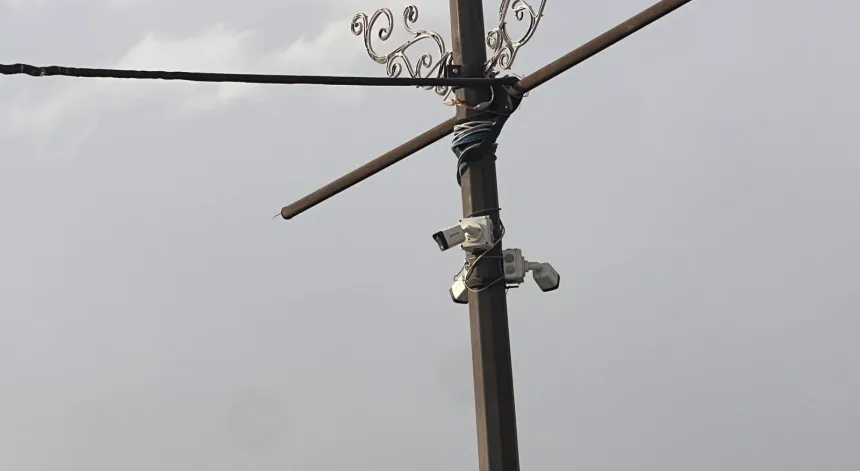
The Taliban’s expanding surveillance camera network in Kabul is drawing renewed scrutiny over how technology is being prioritized in a city still facing significant problems in public services and road safety.
On the 40-Meter Taimani Road, several cameras reportedly cover different directions of the street, while a traffic light nearby remains out of operation and visible speed-control equipment is absent. The contrast has raised questions about whether surveillance technology is receiving greater attention than basic urban safety infrastructure.
According to information provided about the network, nearly 100,000 surveillance cameras are now active across Kabul. The Taliban say the cameras are intended to prevent crime and improve public security.
However, details about how recorded footage is stored, who can access the data and what safeguards exist against misuse have not been clearly disclosed. The lack of publicly available information on data protection has fueled concerns among critics about privacy and the potential scope of the surveillance system.
Some critics warn that, without clear safeguards, an extensive surveillance network could potentially be used to track critics or monitor citizens more broadly. There is no evidence presented here establishing that the network is currently being used for those purposes, and the concerns remain focused on potential misuse and the absence of transparent safeguards.
The expansion of surveillance infrastructure is also taking place as Afghanistan continues to face widespread poverty, economic difficulties, limited employment opportunities and restrictions on education. Millions of girls remain excluded from secondary and university education.
The debate therefore extends beyond the cameras themselves. Supporters of expanded surveillance point to security and crime prevention, while critics argue that greater technological capacity should be accompanied by investment in employment, education, public services and road safety.
For Kabul residents, the central issue is increasingly not simply how many cameras are installed, but how the information they collect is governed, who can use it and whether stronger surveillance is matched by equally strong protections for public safety and privacy.