
Taliban authorities in Herat have issued a new public notice outlining regulations on women’s dress and presence in public spaces, days after reports of women’s arrests and the suppression of protests in the Jebrail township area of the city.
The notice was published on Wednesday by Bakhtar News Agency, a state-run media outlet under Taliban administration, and reiterates provisions contained in the Taliban’s Law on the Promotion of Virtue and Prevention of Vice.
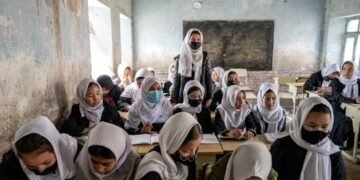
According to the statement, women are required to cover their entire bodies in public, while concealing the face is also described as necessary. The guidance further stresses the use of loose-fitting and non-transparent clothing and repeats restrictions concerning women’s participation in public life.
The Herat Department of Information and Culture also emphasized limitations related to women’s voices in certain settings, the prevention of interaction between women and unrelated men, and the need for women to leave their homes only when necessary.
The regulations are based on Article 13 of the Taliban’s morality law, legislation that drew widespread criticism from Afghan civil society groups, human rights organizations and international institutions after its adoption.
The announcement comes amid heightened tensions in Herat following reports that women had been detained over issues related to dress and appearance. The reported arrests triggered public demonstrations in parts of the province, including the Jebrail area, where residents voiced concerns over increasing restrictions on women.
Local sources say Taliban authorities have strengthened security measures across Herat since the protests, increasing the presence of security personnel and monitoring activities in several parts of the city.
Taliban officials have not directly linked the newly published guidance to the recent unrest. However, the timing of the announcement has drawn attention because it follows days of public criticism, reported arrests and demonstrations related to women’s rights and social restrictions.
The developments highlight the continuing debate surrounding the Taliban’s policies toward women. Since returning to power in 2021, the group has introduced a series of measures affecting women’s access to education, employment, travel and public life. Taliban officials maintain that these policies reflect their interpretation of Islamic principles, while critics argue that they significantly restrict the rights and freedoms of women and girls.
The publication of the new guidance suggests that Taliban authorities remain committed to enforcing existing regulations despite growing domestic and international scrutiny. As tensions continue in Herat, the issue of women’s rights remains one of the most sensitive and closely watched aspects of governance in Afghanistan.