
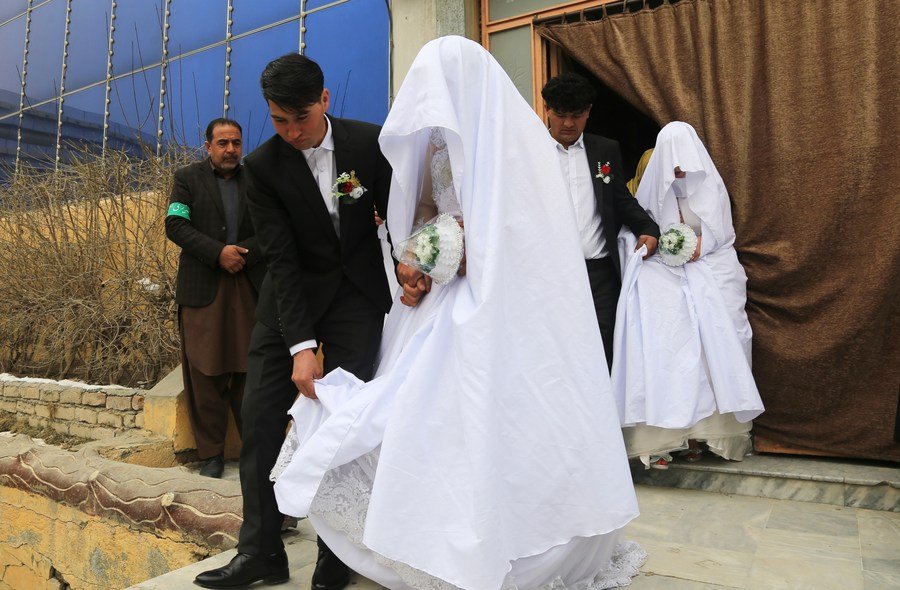
Afghanistan’s Taliban-run Ministry for Hajj and Religious Affairs has released this week’s official Friday sermon, instructing mosque preachers across the country to condemn a range of social practices involving women, weddings and engagement ceremonies that the group considers contrary to Islamic law.
The 10-page sermon, titled “Avoiding Forbidden Acts and Un-Islamic Customs in Weddings and Other Celebrations,” states that women should not wear strongly scented perfume when leaving their homes. It also describes dancing by both women and men at wedding ceremonies as forbidden and criticizes several long-standing engagement traditions.
Among the practices specifically rejected is the exchange of engagement rings before a religious marriage contract. The ministry describes the custom as one borrowed from Christianity and therefore unacceptable. It also states that engaged couples should not touch each other’s hands or apply henna to one another before an Islamic marriage has been formally concluded.
The sermon further criticizes interaction between unmarried men and women, arguing that private meetings or socializing between individuals who are not legally married is prohibited, even if intended to help prospective couples become better acquainted before marriage.
In another section, the ministry targets women’s beauty salons, claiming that some establishments facilitate practices it considers contrary to Islamic teachings. The text specifically refers to eyebrow shaping, facial hair removal, cosmetic procedures to enhance the lips and bridal makeup.
The ministry has instructed mosque preachers nationwide to address these issues during Friday prayers as part of a unified sermon distributed each week.
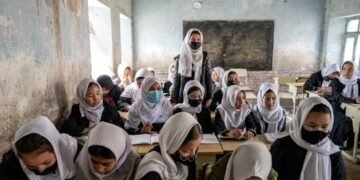
The directive comes as the Taliban continue to enforce sweeping restrictions on women and girls following their return to power in 2021. Those measures include banning girls from secondary education, prohibiting women from attending universities, restricting women’s employment and imposing broad limits on their movement and participation in public life.
The Taliban maintain that these policies are based on their interpretation of Islamic law and describe them as internal matters. However, the restrictions have been widely criticized by the United Nations, international human rights organizations and numerous governments, which argue they violate the rights of Afghan women and girls.