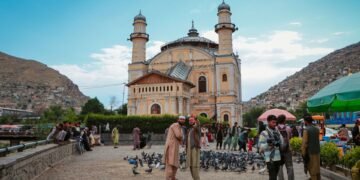

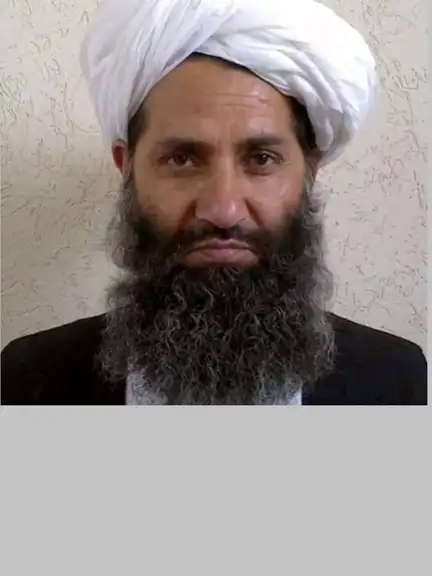
Taliban supreme leader Hibatullah Akhundzada has called for continued learning and religious education in a speech delivered at a religious school in Kandahar, according to a text published by Hamdullah Fitrat, the Taliban’s deputy spokesperson. The published text makes no mention of girls’ right to education, as millions remain barred from secondary school and university.
Fitrat said Akhundzada delivered the speech on Thursday, October 15. In the text, the Taliban leader described education and the acquisition of knowledge as essential to eliminating what he called corruption and bringing about reform in society. He urged the public and religious scholars to continue teaching and learning religious subjects.
“Religious scholars are the heirs of the prophets,” Akhundzada said in the published text, adding that religious scholars convey divine rulings and Sharia to the public and play a role in reforming society.
He also urged religious students not to abandon their studies, to work to expand their knowledge, to remain humble when learning from others and not to withhold their knowledge. The text encourages students to attend religious jurisprudence gatherings after graduation and not to pursue worldly status.
“Today is a time of trial; be very cautious,” Akhundzada said, according to the published remarks.
However, the text released by Fitrat contains no reference to girls’ and women’s access to education or to the restrictions imposed by the Taliban on secondary and higher education. The published excerpts do not establish whether the issue was addressed elsewhere in the speech.
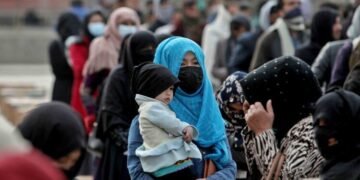
Since returning to power in August 2021, the Taliban have barred girls from attending school beyond Grade 6. In December 2022, the authorities also suspended women’s access to universities. The restrictions remain in place, leaving Afghanistan the only country in the world where girls and women are effectively excluded from secondary and higher education.
UNICEF said on August 14, 2026, that more than 2.6 million girls in Afghanistan had been denied secondary education since the Taliban takeover. The agency has warned that the consequences extend beyond individual students, affecting the country’s future workforce and essential public services.
In an analysis published in April 2026, UNICEF estimated that Afghanistan could lose up to 20,000 women teachers and 5,400 female health workers by 2030 if restrictions on girls’ education and women’s employment continue. The agency also estimated that these restrictions cost the Afghan economy about $84 million in lost economic output each year.
The contrast between the speech’s emphasis on acquiring knowledge and the continued exclusion of millions of girls highlights a major unresolved issue in Afghanistan’s education system. While the published text promotes religious learning and encourages students to expand their knowledge, it offers no indication of any change in the Taliban’s restrictions on girls’ education.