
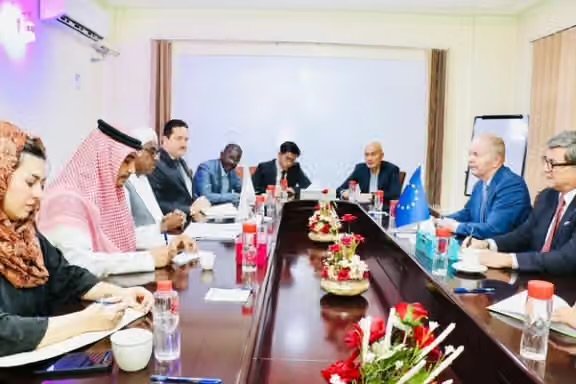
Representatives of the Organization of Islamic Cooperation (OIC) and the European Union have discussed Afghanistan’s humanitarian situation and opportunities for international cooperation, including in health, education and alternative livelihoods.
According to the OIC’s representation for Afghanistan, Tariq Ali Bakheet, the organization’s special envoy to the country, met Thomas Fahrensen, the European Union’s special representative for Afghanistan, and Nicola Bellomo, chargé d’affaires of the EU Delegation to Afghanistan. The discussions covered current developments and humanitarian needs, with both sides emphasizing the importance of continued international coordination.
The OIC said the meeting also explored potential cooperation in health services, education and alternative livelihood programs. These areas remain important amid Afghanistan’s economic difficulties and continuing humanitarian challenges.
Bakheet separately met Scott Smith, head of political affairs at the United Nations Assistance Mission in Afghanistan, and Tajuddin Oyewale, the UNICEF representative in Afghanistan. According to the OIC, participants reviewed the humanitarian situation and ongoing efforts by the international community to address the needs of Afghans.
The meetings form part of Bakheet’s visit to Kabul, where he has also held separate discussions with senior Taliban officials. The OIC said those conversations covered humanitarian concerns, education, health services, economic development and other challenges facing the country. The right of girls to education was also raised, an issue that remains a major point of concern in Afghanistan.
The discussions underscore continued engagement between international organizations over how to respond to Afghanistan’s needs. Coordination among diplomatic missions and humanitarian agencies can help identify priorities and explore ways to support essential services and livelihoods. However, the statements released about these meetings did not announce specific new funding commitments, detailed implementation plans or measurable targets.
For Nimruz, the key question is whether diplomatic discussions will translate into practical improvements for people facing hardship. Continued international engagement may help sustain humanitarian support and cooperation, but its impact will depend on concrete programs, access to affected communities, available resources and progress on fundamental concerns, including girls’ access to education.