
North Korean leader Kim Jong Un has visited a newly opened defense museum showcasing the country’s weapons programs, including the Hwasong-20 intercontinental ballistic missile, as Pyongyang continues to develop its military capabilities and speculation grows over a possible meeting with US President Donald Trump.
North Korea’s state-run Korean Central News Agency released photographs of the visit on Tuesday, October 13, 2026. According to the agency, Kim attended the opening ceremony of the Defense Development Museum on Sunday, accompanied by his wife, Ri Sol Ju, and daughter, Ju Ae.
The museum displays weapons developed during Kim’s leadership, including drones and intercontinental ballistic missiles. Its permanent exhibition provides a public showcase of the country’s military and technological programs, presenting them as achievements of the North Korean leadership.
Shin Jong-woo, secretary-general of the Korea Defense and Security Forum, told Reuters that a display in front of the Hwasong-20 launcher appeared to depict a multiple-warhead design. He also said a map in the exhibition illustrated missile ranges extending beyond the continental United States to regions including the Middle East, Australia and South America. These were his assessments of the displayed material; the exhibition alone does not independently establish the missile’s operational capabilities.
Shin described the museum as an effort to highlight Kim’s defense-development achievements and suggested that the display could serve a strategic messaging purpose ahead of a possible summit with Washington. Lim Eul-chul, a professor at Kyungnam University’s Institute for Far Eastern Studies, told Reuters that placing weapons in a permanent museum could also help turn military programs into part of the government’s official legacy.
Trump has raised the possibility of meeting Kim during a planned trip to China in mid-November for the Asia-Pacific Economic Cooperation summit. However, no confirmed agreement for a meeting has been announced in the information available, and it remains uncertain whether the two leaders will hold talks.
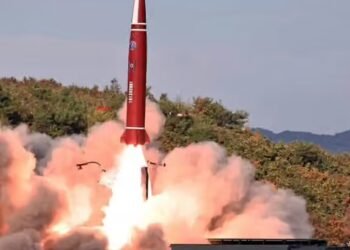
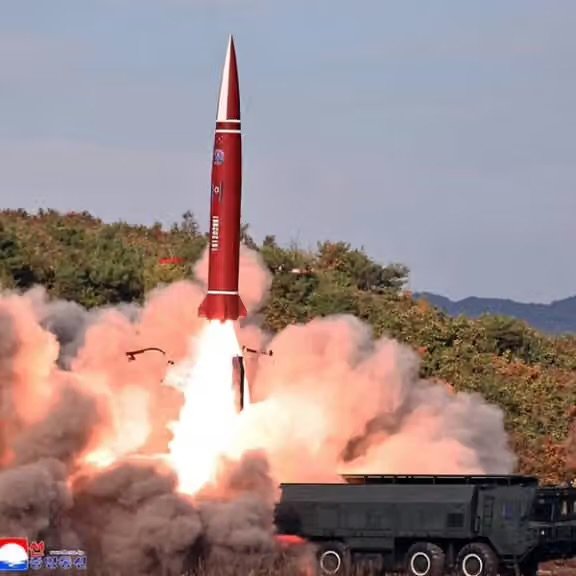
Separately, North Korea said it tested a tactical ballistic missile on Monday, October 12. State media described the test as an effort to verify improvements to a key component of the missile, without identifying the specific modification. North Korea characterized the development as an important step in improving the performance of its offensive weapons systems.
South Korea’s military said North Korea had launched several ballistic missiles toward waters off its eastern coast. The reported launch was the fourth North Korean missile test in the preceding month and followed a recent test of a hypersonic missile, according to the report.
Taken together, the museum opening and the latest test highlight Pyongyang’s parallel focus on weapons development and public presentation of its military capabilities. The exhibition may reinforce the government’s domestic messaging while signaling strategic ambitions to foreign audiences. If diplomatic engagement with Washington resumes, these displays could shape the political atmosphere surrounding negotiations, but they do not by themselves demonstrate that a summit is imminent or that it would produce a diplomatic breakthrough.
For Nimruz, the key question is whether military signaling and diplomacy can proceed in parallel. Any assessment of a possible summit will depend on confirmed arrangements, the positions taken by both governments and whether discussions lead to concrete steps on security and regional stability.