
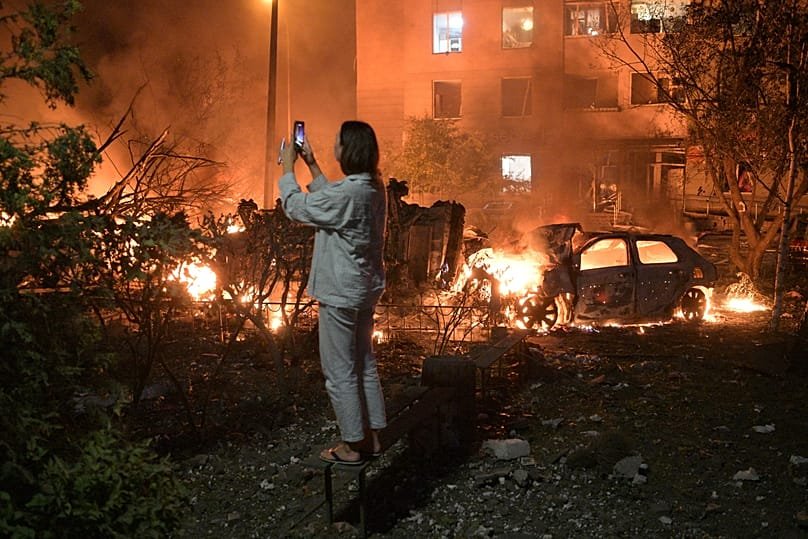
Ukrainian President Volodymyr Zelenskyy has accused Russia of striking a major power and heating facility in Kyiv with a ballistic missile, raising fresh questions about the viability of a proposed ceasefire covering energy infrastructure.
In a statement on social media, Zelenskyy said Ukraine had supported the energy ceasefire, but Russia had again targeted a power facility and the lives of Ukrainian civilians. He also criticized what he described as a failure to provide early warnings about ballistic missile launches and urged the international community, particularly the United States, not to remain silent.
According to the information reported, Kyiv faced heavy missile attacks for a second consecutive night. The attacks have renewed concerns about the reliability of electricity and heating supplies in the Ukrainian capital. However, the extent of the damage from the latest strike and the facility’s current operational status have not been independently established in the information available.
The facility identified in the report is Kyiv Thermal Power Plant No. 4, commonly known as CHPP-4. It supplies electricity and heating to parts of the Dniprovskyi and Darnytskyi districts. The plant was reportedly struck in February, an attack that previously disrupted heating and hot-water services to more than 1,000 residential buildings, 47 schools and 72 kindergartens.
Meanwhile, US President Donald Trump has rejected claims that Washington has cut Ukraine off from American intelligence. Trump said the United States continues to provide assistance and intelligence to Ukraine and that his objective is to end the war.
Asked about Russia’s alleged violation of the energy ceasefire, Trump referred to Ukrainian attacks on several locations the previous day but did not directly answer whether Moscow had violated the proposed arrangement.
Russian Foreign Minister Sergey Lavrov, meanwhile, criticized the ceasefire proposal, arguing that Ukraine did not deserve such an opportunity. He also claimed that European countries would use any pause in hostilities to supply Kyiv with additional weapons. These statements reflect Moscow’s position and do not independently establish whether either side violated the proposed ceasefire.
The latest reported strike highlights the difficulties of securing and verifying limited ceasefires during a continuing war. Agreements to protect energy infrastructure can reduce risks to civilians, but their effectiveness depends on clear terms, reliable monitoring and credible mechanisms for addressing alleged violations.
For Nimruz, the immediate concern is the potential impact on civilians who depend on reliable heating and electricity, particularly as damage to energy facilities can disrupt homes, schools and essential services. Until the damage and the circumstances of the latest attack are independently confirmed, the full consequences remain uncertain. The competing statements from Kyiv, Moscow and Washington also underscore how disagreements over compliance could complicate efforts to sustain an energy truce.