

Israel says it has killed Muhammad Abu Alwan, whom it identifies as a senior Hamas finance official, in an airstrike on a vehicle in western Khan Younis in southern Gaza.
Israeli Prime Minister Benjamin Netanyahu and Defense Minister Israel Katz said Abu Alwan was the head of Hamas’s finance department and described the operation as part of Israel’s effort to disrupt the group’s sources of funding and prevent it from rebuilding its capabilities.
According to the Israeli account, Abu Alwan had worked within Hamas’s financial structure for about a decade and was involved in managing budgets and financial resources for different parts of the organization.
Israeli officials also claim that more than 1 billion shekels, equivalent to roughly $330 million, passed through financial channels managed or directed by Abu Alwan during the war.
Israel further accuses him of helping Hamas rebuild its capabilities and maintain the resources required for its military and administrative structures.
However, these details about Abu Alwan’s position, responsibilities and the scale of the funds attributed to him are based primarily on information provided by Israeli military and political authorities and have not been independently verified.
Reuters reported that two Palestinians, including Muhammad Abu Alwan and Osama Abu Khater, were killed when an Israeli airstrike hit a vehicle in western Khan Younis. Two other people were wounded, according to local medics.
Local health officials also reported at least four Palestinian deaths from Israeli strikes in Gaza on Wednesday.
The killing comes as Israel continues to focus on Hamas’s leadership, infrastructure and financial networks. Israeli officials have repeatedly argued that disrupting funding channels is necessary to limit Hamas’s ability to maintain military and administrative operations.
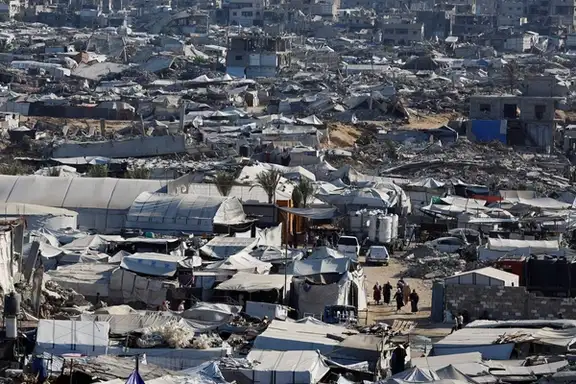
Khan Younis has remained one of the main areas of military activity in Gaza. The city and surrounding areas have suffered extensive damage during the war and have repeatedly been affected by Israeli strikes and military operations.
The reported killing of a senior Hamas financial official could disrupt part of the organization’s financial structure, particularly if Abu Alwan held the level of responsibility claimed by Israel. But the actual impact on Hamas’s broader ability to move funds and sustain its structures cannot be independently assessed without reliable information about the organization’s financial networks.
The strike also comes despite ongoing diplomatic efforts aimed at reducing violence in Gaza. Reuters reported that a US-brokered ceasefire agreed last year has faced continued violations and that negotiations over Hamas disarmament and an Israeli military withdrawal have made limited progress.
For now, the killing of Abu Alwan has been confirmed by Israeli officials and reported by international news agencies, while Hamas had not immediately commented. The precise nature of his role within Hamas and the broader impact of his death remain less certain.
The incident underscores a continuing feature of the Gaza conflict: even amid diplomatic efforts to preserve a ceasefire framework, Israel continues to target what it describes as Hamas’s military, leadership and financial structures.