
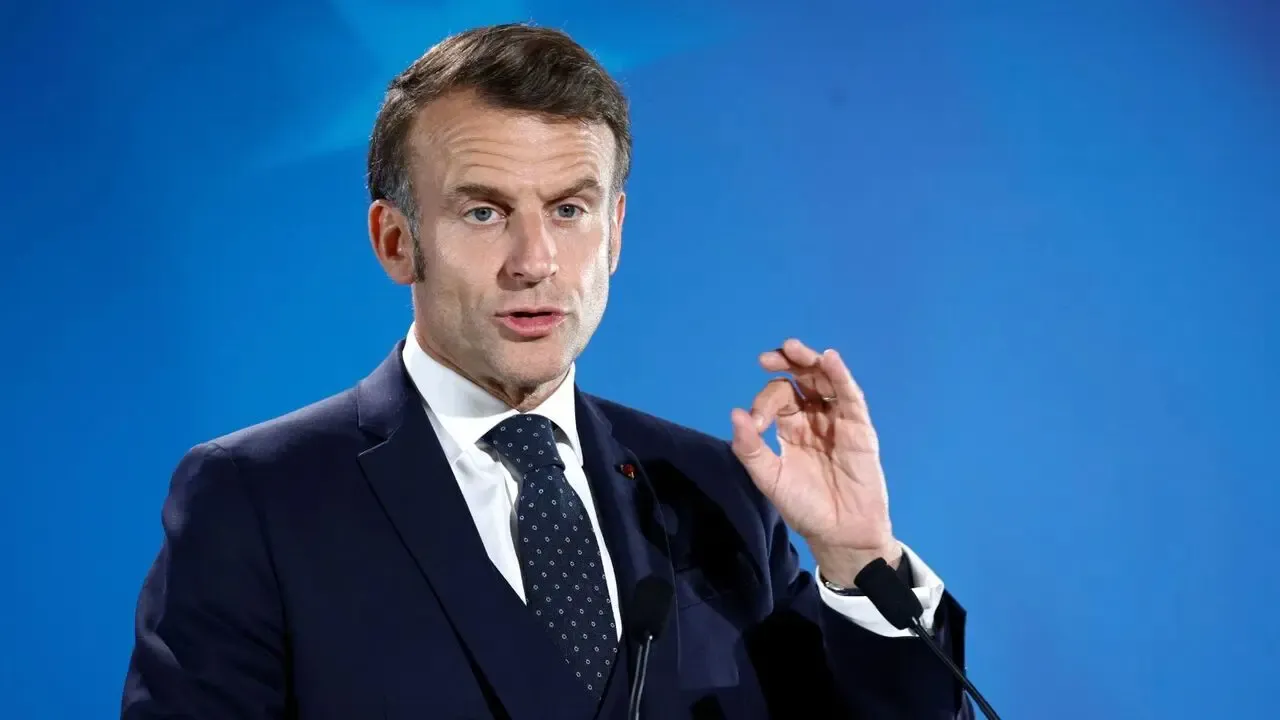
French President Emmanuel Macron has announced that France will send military personnel, radar systems and defensive equipment to Saudi Arabia to help protect the strategic Red Sea energy hub of Yanbu, as missile and drone attacks in the region intensify.
Macron said on September 24 that the deployment was agreed with Riyadh and would focus on protecting critical infrastructure. He emphasized that the mission was defensive and did not mean France was entering the wider regional conflict.
“We are going to send military resources, that is to say soldiers, radar systems and defense systems, to protect this site — not to get us involved in any conflicts, but to protect this site,” Macron said.
France has not publicly disclosed the number of personnel involved, the specific radar or air-defense systems to be deployed, or the precise timetable for their arrival. French military officials have described the broader approach as defensive and focused on protecting critical installations and regional stability.
The decision follows a period of heightened attacks against Saudi Arabia. Saudi authorities have reported intercepting ballistic missiles aimed toward areas including Yanbu and Taif, while the Houthis in Yemen have claimed attacks against Saudi targets, including energy infrastructure in Yanbu. Individual claims about damage have not all been independently verified.
Yanbu is particularly important because of its role in Saudi Arabia’s energy network. The Red Sea port hosts major oil storage and refining facilities and serves as the western endpoint of the kingdom’s East-West pipeline, allowing Saudi crude to reach the Red Sea without passing through the Strait of Hormuz.
That alternative route has gained strategic importance as conflict and security disruptions affect major energy corridors across the Middle East.
The French deployment therefore carries significance beyond the immediate protection of one Saudi facility. By providing personnel, radar and defensive systems, Paris is adding a European military layer to the protection of Saudi energy infrastructure.
France has stressed that the mission is not intended to involve its forces in offensive operations. The distinction is important because Paris is attempting to support Saudi Arabia’s defensive capabilities while avoiding a formal entry into the broader conflict.
At the same time, placing French military personnel and air-defense capabilities around a major energy facility represents a deeper security commitment to Riyadh. It also reflects growing European concern over the potential effects of attacks on regional energy infrastructure.
France is not the only European country increasing defensive support for Saudi Arabia. Britain has announced additional military assistance, while other European states have also discussed or undertaken measures to support regional air and maritime security.
For Saudi Arabia, protecting Yanbu is closely linked to maintaining flexibility in oil exports. The port provides an alternative outlet for crude that would otherwise depend more heavily on routes through the Gulf and the Strait of Hormuz.
For global energy markets, the vulnerability of Yanbu matters because prolonged disruption of Saudi Arabia’s export infrastructure could tighten supply and contribute to further volatility in oil prices.
The deployment also illustrates how the consequences of the conflict involving Yemen and the Houthis are extending beyond the battlefield. Missile and drone threats are increasingly being treated as a direct risk to critical infrastructure, energy flows and regional security arrangements.
For Nimruz, the central issue is not simply the arrival of French military equipment, but what the deployment signals about the changing security environment around Saudi Arabia’s energy infrastructure.
Paris is defining its role as defensive, while Riyadh is receiving additional protection for a strategically important export route. Whether the deployment remains limited to site defense or becomes part of a broader European security commitment will depend on how the regional conflict develops and whether attacks against Saudi territory and energy infrastructure continue.