
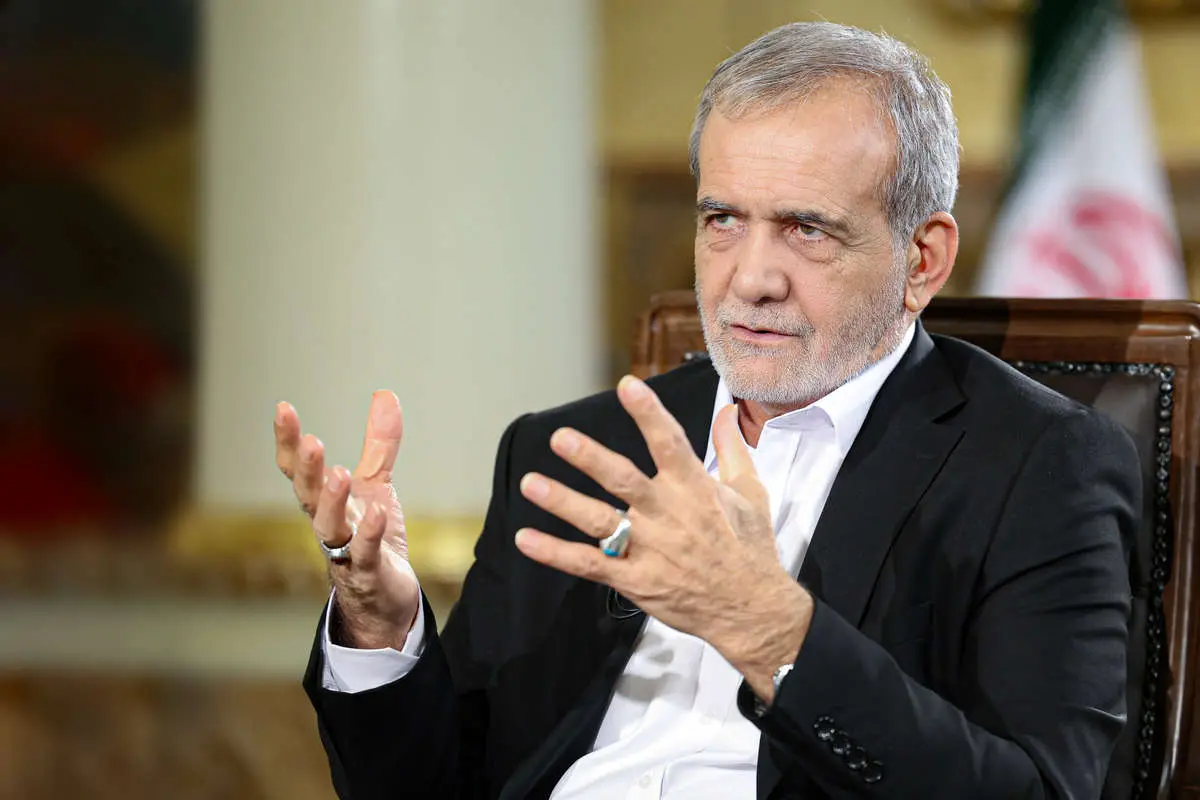
Iranian President Masoud Pezeshkian says Tehran is prepared to return to the Islamabad memorandum if the United States resumes its commitments, signaling that Iran is keeping the door open to renewed diplomacy but is unwilling to return to the previous framework without a change in Washington’s position.
Pezeshkian made the remarks on Tuesday, September 1, at the 25th Shanghai Cooperation Organization summit in Bishkek, Kyrgyzstan.
He said the Islamabad memorandum, brokered by Pakistan and Qatar after Iran-US talks on June 18, lasted less than two weeks.
“If the United States returns to its commitments under the memorandum, the Islamic Republic of Iran will immediately reciprocate,” Pezeshkian said.
The Iranian president also claimed that Washington abandoned its commitments less than two weeks after the document was signed and subsequently pursued what he described as excessive demands and a failure to honor its commitments.
Under the memorandum, technical negotiations were supposed to begin with the aim of reaching a final agreement. The proposed framework was intended to establish a lasting end to the conflict between Iran and the United States, restore the Strait of Hormuz to its pre-war status and end the maritime blockade of Iran.
The arrangement was subsequently suspended after both sides accused each other of violating their commitments, while direct military tensions intensified. The Strait of Hormuz also became insecure, and the maritime blockade of Iran continued.
After a month-long pause in direct fighting, another US attack on Iran’s Lark Island was reported on Monday, while Iran said it had launched a missile attack on two US military bases in Jordan. These claims have not been independently verified.
Pezeshkian’s latest remarks therefore amount to more than a general expression of readiness for negotiations. Tehran is effectively telling Washington that diplomacy remains possible, but only if the United States first restores its commitments. This condition shifts the immediate focus from negotiating a new agreement to establishing whether existing commitments can be implemented and sustained.
That distinction is significant because the previous process broke down within weeks. For Iran, the credibility of any renewed diplomatic track now appears closely tied to assurances that commitments made by Washington will not again be abandoned. For the United States, any return to the framework would require addressing the question of whether reciprocal obligations can be verified and enforced.
The future of the Islamabad memorandum therefore depends not simply on whether Iran and the United States are willing to resume talks, but on whether they can rebuild enough trust to prevent another rapid collapse. Regional developments add another layer of uncertainty, particularly the security situation around the Strait of Hormuz, which remains central to the wider dispute.
From the perspective of Nimruz, the most important element of Pezeshkian’s statement is the condition attached to Iran’s offer. Tehran has not closed the door to diplomacy, but it is making US compliance the starting point for any return to the negotiating process. This means that the next phase may be determined less by political declarations and more by concrete actions that can demonstrate whether both sides are prepared to honor their commitments.
If the condition cannot be reconciled with Washington’s position, Pezeshkian’s statement may remain a political opening rather than a practical route back to negotiations. If the two sides can establish a credible mechanism for reciprocal compliance, however, the Islamabad framework could provide a basis for renewed diplomacy.
The significance of Pezeshkian’s remarks, therefore, is not that a new agreement is imminent. It is that Tehran has publicly defined the terms under which diplomacy could restart, placing US compliance and the credibility of reciprocal commitments at the center of the process.