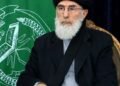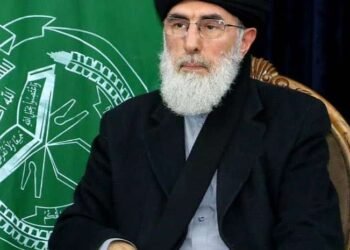

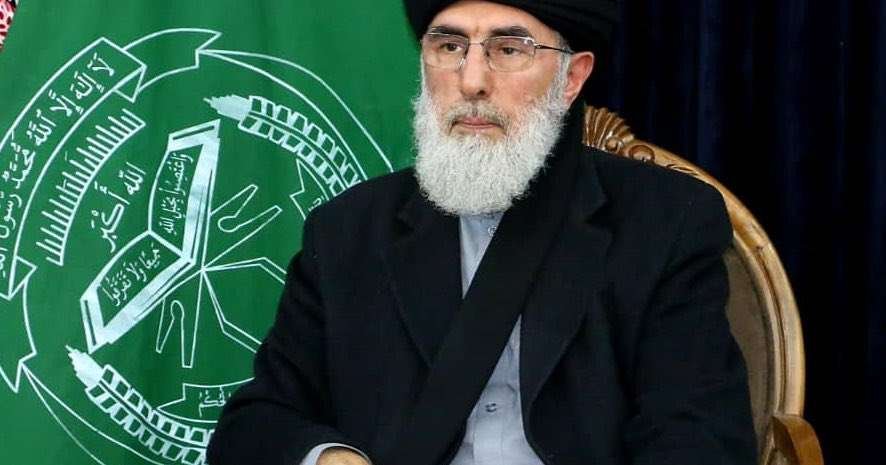
Gulbuddin Hekmatyar, leader of Hezb-e Islami Afghanistan, has intensified his criticism of the Taliban while pursuing efforts to reorganize his political movement, raising questions about the direction of his opposition to the Taliban authorities.
In a recent online address to supporters, Hekmatyar called for power to be transferred from the Taliban to the Afghan people and said Afghanistan’s future political system and government should be determined by citizens through elected representatives.
He also called for a new constitutional process, a national council based on consensus and elections. Hekmatyar said political change in Afghanistan was “inevitable and near,” presenting the current phase as part of a broader political transition rather than announcing a specific alternative government.
His latest statements follow months of increasingly direct criticism of Taliban governance. Hekmatyar has previously criticized the concentration of political power, called for elections and argued that Afghans should have a role in determining the country’s political future.
At the same time, reports indicate that Hezb-e Islami has been attempting to strengthen its organizational structure outside Afghanistan. Hekmatyar has also called on party members who support or have joined the Taliban administration to sever those links with Hezb-e Islami.
The developments are significant in light of the Taliban’s previous actions against the party. The European Union Agency for Asylum has reported that the Taliban ordered the closure of active Hezb-e Islami offices in 2025, along with the detention of affiliated staff and confiscation of party assets. Hekmatyar was also evicted from a government-owned residence in Kabul in 2024.
Hekmatyar’s relationship with the Taliban has changed considerably since the group returned to power in 2021. He initially welcomed the Taliban’s takeover and remained in Kabul for a period, but relations subsequently deteriorated as restrictions on his political activities increased.
Hekmatyar has since left Afghanistan and has been based in Malaysia. Reports from 2025 said he traveled there for medical treatment, while later reporting confirmed that he continued making political statements from outside Afghanistan.
The current phase is different from the immediate aftermath of the Taliban takeover because Hekmatyar’s criticism is now accompanied by efforts to reinforce his party’s organizational identity. In September, he urged Hezb-e Islami members and supporters to cut organizational ties with people who support the Taliban.
There have also been statements from individuals associated with Hezb-e Islami suggesting that armed confrontation could become an option. One senior party member told Afghanistan International that there was “no choice but armed struggle” and warned that a confrontation with Hezb-e Islami could be costly for the Taliban.
That statement, however, represents the position attributed to an individual party member and does not constitute a public announcement by Hekmatyar or a confirmed decision by the party to begin an armed campaign.
Claims by the same party member about continued influence by Hezb-e Islami figures inside Taliban structures have also not been independently verified.
For an armed campaign to become a realistic possibility, Hezb-e Islami would need substantial organizational, financial and military capacity, as well as support or tolerance from regional actors. There is currently no publicly established evidence that such conditions have been secured.
The history of Hezb-e Islami also complicates any assessment of its future role. The movement has a long record of armed conflict, but it also entered a peace agreement with the former Afghan government in 2016 and participated in Afghanistan’s formal political process before the Taliban takeover.
Several prominent Taliban figures have also had previous links to Hezb-e Islami, although those historical connections do not by themselves indicate current coordination with Hekmatyar’s organization.
From the Nimruz perspective, the key development is not simply that Hekmatyar is criticizing the Taliban more strongly. It is the combination of sharper political rhetoric, renewed organizational activity and calls for elections, constitutional reform and greater public participation in determining Afghanistan’s political system.
That could give his opposition a broader political frame if it remains focused on governance, political participation, constitutional arrangements and citizens’ rights rather than ethnic confrontation. At the same time, any movement toward an armed conflict would carry very different implications for Afghanistan’s already fragile security environment.
The central question, therefore, is what direction Hezb-e Islami takes next. Hekmatyar has not publicly announced the launch of an armed war against the Taliban. What is visible so far is a more organized political challenge, accompanied by rhetoric that leaves open questions about the movement’s longer-term strategy.
Whether this develops into sustained political mobilization, cooperation with other opposition groups or a more confrontational security posture remains uncertain. For now, the clearest evidence points to an effort by Hekmatyar to reposition Hezb-e Islami as a political actor challenging the Taliban’s monopoly over Afghanistan’s political system.