
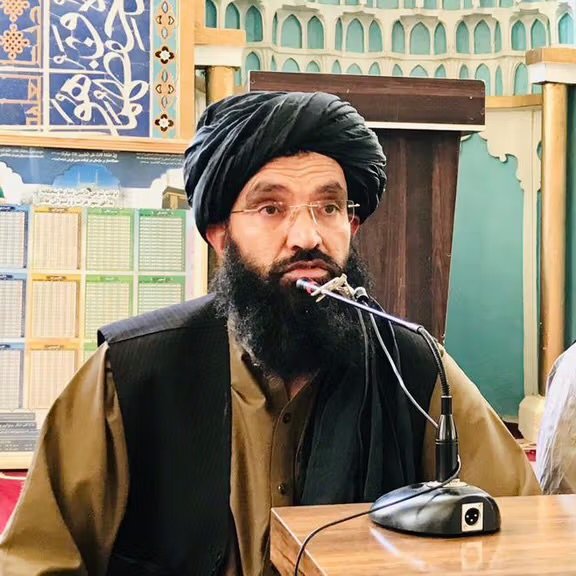
Azizurrahman Al-Muhajir, head of the Taliban’s Ministry for the Promotion of Virtue and Prevention of Vice in Herat, has rejected reports that women were detained for failing to comply with the group’s dress code requirements.
In an audio message published Tuesday by Bakhtar News Agency, a media outlet controlled by the Taliban, Al-Muhajir said women in Herat are complying with what he described as the Taliban’s required hijab standards and insisted that no woman has been arrested because of her clothing.
“No woman has been detained in Herat and women’s hijab is complete. Reports of arrests over improper hijab are propaganda,” he said.
His remarks come amid a wave of reports from local sources, residents, and activists alleging that women in Herat have recently been detained for not adhering to dress regulations imposed by the Taliban.
The controversy has fueled public anger in the western Afghan province. On Tuesday, groups of residents reportedly gathered in the streets of Herat to protest what they described as compulsory hijab enforcement and the increasing restrictions imposed on women.
Demonstrators also voiced concern over reports of women’s arrests and called for an end to policies they say further restrict women’s participation in public life.
Witnesses told media outlets that Taliban forces detained approximately 30 people during the protests. Local reports further claimed that security personnel used force to disperse demonstrators and that at least one person was killed while several others were injured during the unrest.
As of the time of publication, Taliban authorities had not issued an official response to reports regarding the alleged death, injuries, and detention of protesters.
The conflicting narratives have highlighted the growing gap between official Taliban statements and accounts provided by local residents, activists, and independent sources. While Taliban officials deny that women have been arrested over dress code violations, reports from Herat continue to raise questions about enforcement practices, public dissatisfaction, and the broader impact of restrictions on women.
The developments have once again placed the situation of women in Afghanistan at the center of domestic and international attention. Human rights organizations have repeatedly expressed concern over restrictions affecting women’s freedom of movement, education, employment, and participation in public life since the Taliban returned to power in 2021.
NIMRUZ TV has not been able to independently verify all claims and details related to the reported arrests, casualties, and detentions.