
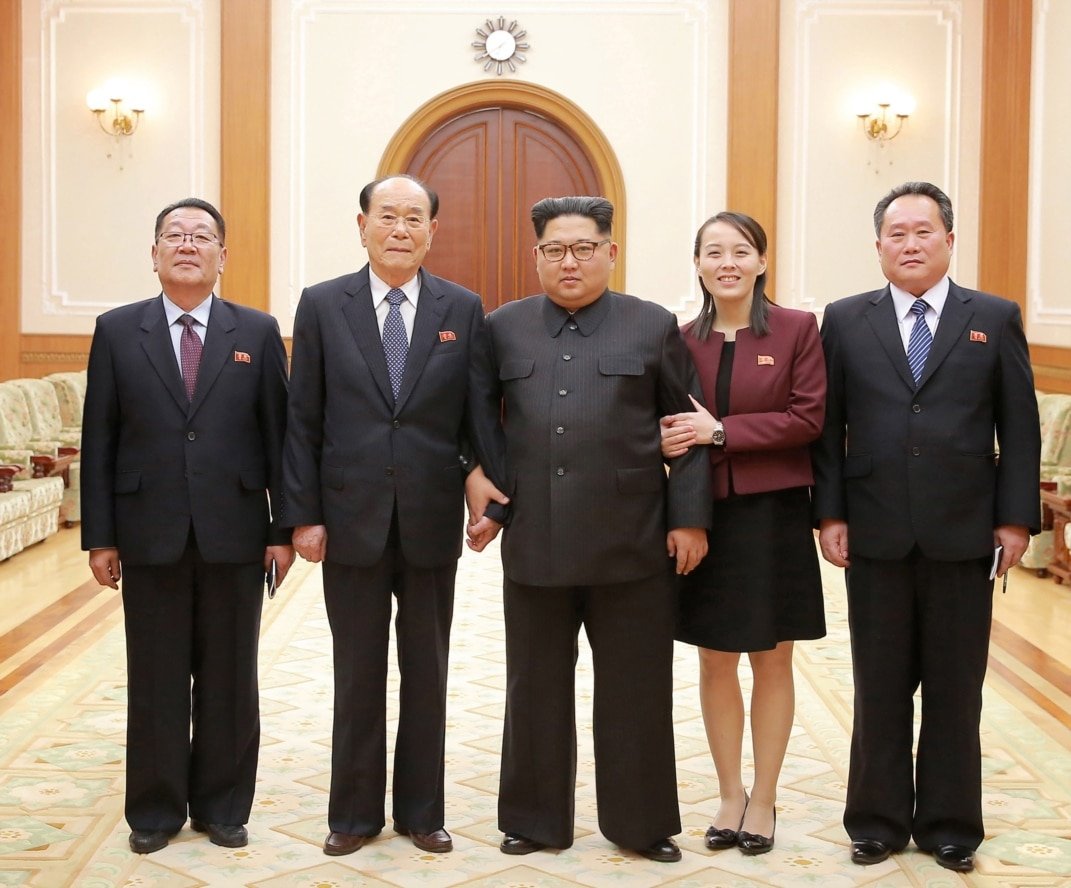
North Korea has once again ruled out negotiations over its nuclear weapons program, signaling that denuclearization remains off the table despite continued international pressure and renewed diplomatic attention surrounding an upcoming visit by Chinese President Xi Jinping.
Kim Yo Jong, the influential sister of North Korean leader Kim Jong Un and one of the country’s most powerful political figures, declared on Sunday that Pyongyang would never abandon its status as a nuclear-armed state.
“Our position as a nuclear power is absolutely not negotiable,” she said. “We will not tolerate any threats.”
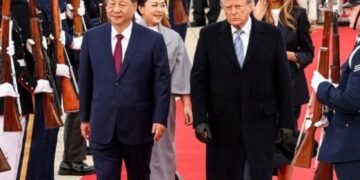
The statement came just ahead of Xi Jinping’s expected visit to North Korea, a trip that underscores the strategic importance of relations between Beijing and Pyongyang at a time of heightened geopolitical competition in East Asia.
Kim Yo Jong serves as a senior official within the ruling Workers’ Party of Korea and has emerged as one of the regime’s most prominent voices on foreign policy. Her public statements are widely viewed by analysts as direct reflections of the leadership’s strategic thinking.
North Korea has long argued that its nuclear arsenal is essential for national survival and deterrence against what it describes as external threats. The United Nations Security Council has imposed multiple rounds of sanctions on the country over its nuclear and ballistic missile programs, but Pyongyang has continued to expand both capabilities.
In a significant move in 2023, North Korea formally enshrined its status as a nuclear weapons state in its constitution. That decision was interpreted by many observers as an effort to permanently close the door on future negotiations centered on complete denuclearization.
The timing of Kim Yo Jong’s remarks is particularly significant. Xi Jinping’s visit highlights China’s continuing role as North Korea’s most important economic partner, diplomatic supporter, and political ally. Beijing remains a critical lifeline for the isolated state, helping cushion the impact of international sanctions and economic pressure.
Analysts say the latest statement serves as a clear message to Washington, Seoul, Tokyo, and other international stakeholders that North Korea does not intend to trade away its nuclear capabilities in exchange for economic incentives, sanctions relief, or political concessions.
Instead, Pyongyang increasingly appears focused on gaining international acceptance as a permanent nuclear power rather than negotiating disarmament. This shift has profound implications for future diplomacy because it challenges the long-standing objective of many governments that have sought the complete denuclearization of the Korean Peninsula.
The declaration also comes amid broader regional security tensions involving military modernization programs, missile development, and strategic competition among major powers in East Asia. As North Korea continues to strengthen its nuclear doctrine and military capabilities, neighboring countries are likely to intensify their own defense planning and security cooperation.
Kim Yo Jong’s latest remarks reinforce a reality that has become increasingly apparent in recent years: the gap between North Korea’s position and international demands for denuclearization remains as wide as ever. With Pyongyang now treating its nuclear arsenal as a permanent pillar of state policy, the prospect of a negotiated disarmament agreement appears more distant than at any point in the past decade.