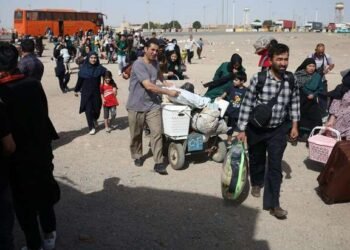

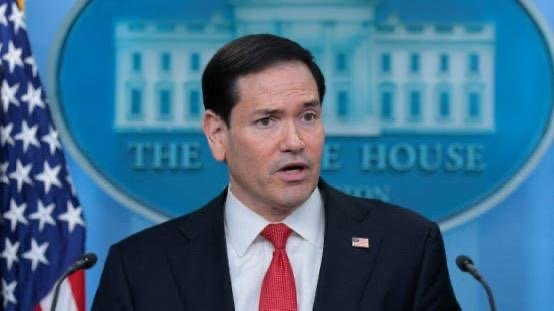
The United States will not admit any Afghan refugees under current conditions and is instead pursuing resettlement options in third countries, Secretary of State Marco Rubio told lawmakers during a Senate hearing on Tuesday.
Rubio’s remarks provide one of the clearest indications yet that Washington is not planning to reopen a pathway for Afghan refugees seeking entry to the United States, despite growing concerns about the fate of former Afghan partners stranded abroad.
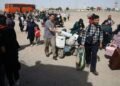
Speaking before the Senate Foreign Relations Committee, Rubio responded to questions from Democratic Senator Chris Coons regarding Afghan refugees currently housed at Camp As Sayliyah in Qatar. The facility is home to hundreds of Afghans awaiting decisions on their immigration status following the U.S. withdrawal from Afghanistan.
Coons warned that approximately 1,100 former Afghan partners of the United States remain in Qatar, including around 400 children and 150 relatives of American service members. He expressed concern that some could face transfer to countries struggling with humanitarian and public health crises or potentially be returned to Afghanistan.
The senator urged the administration to work with Congress to secure a solution, particularly for family members of U.S. military personnel and Afghans who supported American missions during two decades of war.
Rubio, however, said he could not commit to bringing the refugees to the United States.
“I cannot make that commitment,” Rubio said. “At the moment, we cannot bring any Afghans into the country.”
He pointed to an executive order issued following an attack involving members of the National Guard last year, saying current restrictions prevent the admission of Afghan refugees.
At the same time, Rubio said the administration is actively negotiating with several countries willing to accept Afghan refugees. According to the secretary of state, at least five countries have expressed readiness to receive portions of the refugee population.
“I will work with you to find appropriate places for these people,” Rubio told Coons. “We want this to happen.”
The issue of Afghan refugees has remained one of the most complex challenges stemming from the U.S. withdrawal from Afghanistan in 2021. Thousands of Afghans who worked alongside American military forces, diplomatic missions, and aid organizations were evacuated following the fall of Kabul but remain in temporary locations across Qatar, the United Arab Emirates, Albania, and other countries while awaiting permanent resettlement.
NIMRUZ ANGLE
Rubio’s comments suggest that Washington is shifting from a U.S.-based resettlement model toward a third-country approach. While the administration says it remains committed to finding safe destinations for Afghan refugees, the policy signals a significant departure from expectations held by many Afghans who believed their cooperation with the United States would ultimately lead to relocation to America.
FINAL ANALYSIS
The announcement is likely to deepen uncertainty among thousands of Afghans whose futures remain unresolved nearly five years after the collapse of the former Afghan government. While the United States appears determined to avoid expanding refugee admissions, it must now convince partner nations to absorb vulnerable populations who expected protection under American commitments. The success or failure of that effort could shape Washington’s credibility among future allies and partners in conflict zones around the world.