
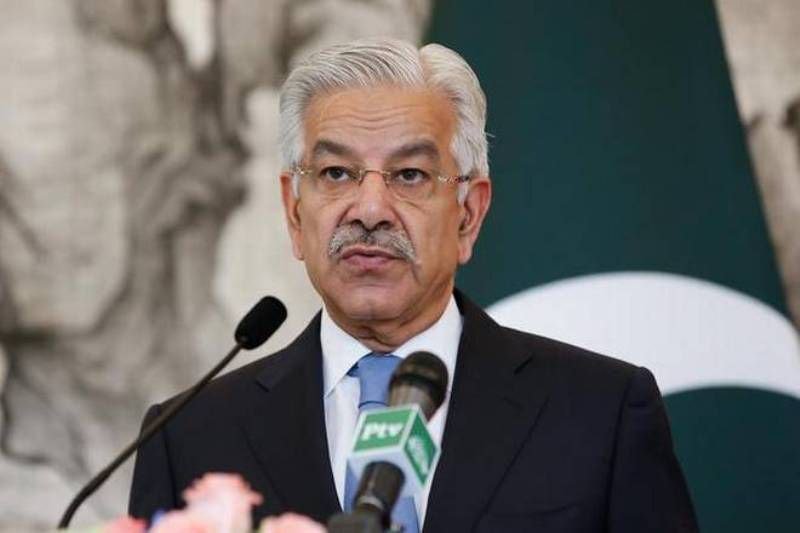
Pakistan’s defense minister has dismissed reports suggesting that the Taliban leadership has moved to restrain the Tehrik-i-Taliban Pakistan (TTP), insisting that Islamabad has seen no practical change in the group’s activities or in the Taliban’s approach toward it.
Khawaja Asif said reports claiming Taliban Supreme Leader Hibatullah Akhundzada had instructed the TTP to halt attacks inside Pakistan remain unproven in practice and have not altered realities on the ground.
“This position has only appeared in media reports and has not resulted in any real change,” Asif said, arguing that Taliban support for the TTP continues despite recent claims of behind-the-scenes efforts to reduce tensions.
The remarks came after Pakistan’s Express Tribune reported that Taliban officials had unofficially informed Islamabad that Akhundzada had warned the TTP against carrying out attacks inside Pakistan. According to the report, the message was part of broader Taliban efforts to reassure Pakistani authorities about the activities of militant groups operating from Afghan territory.
However, Pakistani officials reportedly viewed the message as insufficient. Islamabad has repeatedly demanded concrete action rather than verbal assurances, including measures to prevent TTP operations, expel its members from Afghanistan, and provide security guarantees against future attacks.
Asif also warned against relying on what he described as contradictory messages from Taliban officials regarding militant groups. He said Pakistan has yet to observe any new operational steps that would demonstrate a genuine policy shift.
The dispute comes amid worsening relations between Pakistan and the Taliban authorities. Border clashes, rising TTP attacks inside Pakistan, and mutual accusations have pushed relations between Kabul and Islamabad into one of their most difficult phases in recent years.
Several regional actors, including Saudi Arabia, Qatar, Turkey, and China, have reportedly encouraged dialogue between the two sides. Despite those efforts, diplomatic engagement has so far failed to produce a lasting framework for resolving security disputes.
The Taliban have repeatedly denied allowing foreign militant groups to use Afghan territory for attacks against other countries. Pakistani officials, however, continue to argue that TTP fighters enjoy operational space inside Afghanistan and pose a direct threat to Pakistan’s national security.
NIMRUZ ANGLE
The dispute is no longer centered on whether messages are being exchanged between the Taliban and Pakistan. The real issue is whether those messages are backed by measurable action. Islamabad’s latest response suggests that trust has eroded to the point where political assurances alone are no longer enough to influence policy or improve relations.
FINAL ANALYSIS
The latest comments from Pakistan’s defense minister underline the widening gap between diplomatic messaging and security expectations. While the Taliban appear eager to reduce tensions through political channels, Pakistan is demanding verifiable actions against the TTP. Unless both sides find a mechanism to bridge that trust deficit, tensions are likely to persist, increasing the risk of further instability along the Afghanistan-Pakistan border and complicating broader regional security efforts.