
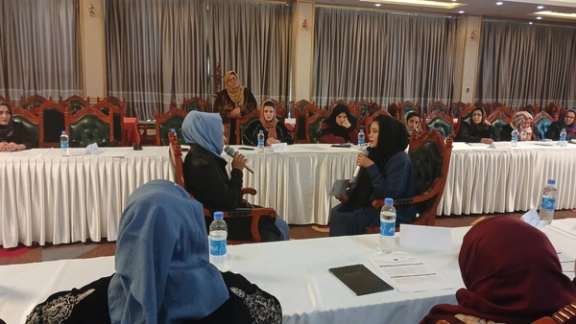
The World Health Organization (WHO) says it has trained 551 health workers in Afghanistan, including 192 women, through a European Union-funded programme aimed at improving treatment for drug use disorders and related mental health conditions.
In a statement issued on Thursday, 30 Mizan, WHO said the training is designed to strengthen healthcare workers’ ability to identify and manage substance use disorders and associated mental health problems.
The programme began in December 2022 with funding from the European Union, while practical activities, including health worker training, continued from 2023 onward. Implemented with WHO partners, the initiative focuses on strengthening the capacity of specialised addiction treatment facilities and improving the quality of care.
According to United Nations estimates cited in reports on Afghanistan, around four million people in the country experience drug addiction, with women accounting for 35 percent of this population. UN figures also indicate that nearly two-thirds of addiction treatment centres in Afghanistan provide services exclusively to men, creating a significant barrier for women seeking treatment.
United Nations reports on substance use in Afghanistan have identified poverty, unemployment and economic pressure among the factors people cite when explaining continued drug use. Difficulties meeting basic needs can further complicate recovery and access to treatment.
WHO says training healthcare workers can help treatment facilities better identify the needs of people and communities affected by substance use and provide more appropriate care and support throughout recovery.
The programme addresses an important gap in Afghanistan’s healthcare system, particularly for women who face limited access to specialised treatment. However, the number of workers trained does not by itself establish how many additional patients have received care or whether treatment access has improved nationwide. Those outcomes depend on the availability of services, trained staff, funding and facilities able to meet patients’ needs.