
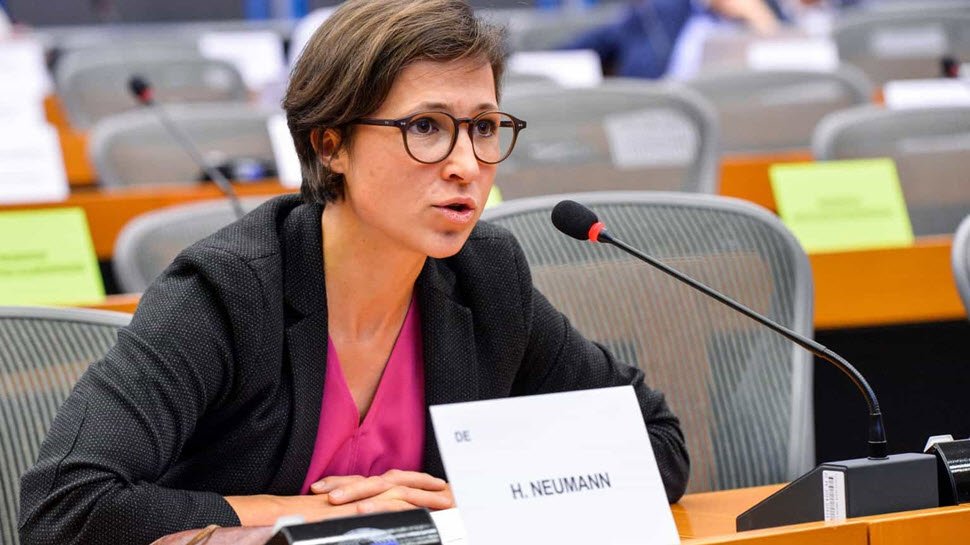
Hannah Neumann, a Member of the European Parliament, has strongly criticized the Taliban’s decision to ban the use of smartphones in government offices across Afghanistan, describing the measure as part of a broader effort to control information and restrict the country’s connection with the outside world.
In a post published on X on Friday, Neumann said the Taliban understand that the circulation of images and videos documenting women’s protests, human rights violations and controversial policies can weaken their control over society.
According to the European lawmaker, the new restriction is intended to limit the flow of information, conceal abuses and silence critical voices.
Neumann argued that authoritarian regimes learn from one another and recognize that controlling information is a key tool for maintaining power.
She urged European Union institutions to closely monitor developments in Afghanistan and not remain indifferent to growing restrictions on citizens’ access to information.
The German politician warned that such measures could contribute to Afghanistan’s further isolation and widen the gap between the country and the international community.
“What begins with silencing women in Herat ultimately becomes an attempt by a regime to cut an entire society off from the world,” Neumann wrote.
Her comments came after reports that a Taliban military court issued a directive prohibiting all government employees from using smartphones while on duty.
According to the reported order, individuals found violating the ban could have their phones confiscated or destroyed and may face referral to a military court.
The decision has sparked concern among activists and observers who view access to information and communication technology as essential for transparency, public accountability and civic participation.
Critics argue that restrictions on digital communication could further limit the ability of journalists, civil servants and ordinary citizens to document events and communicate with the outside world.
The Taliban have not publicly responded to Neumann’s remarks, but the policy has already generated debate among rights advocates and international observers monitoring developments in Afghanistan.