
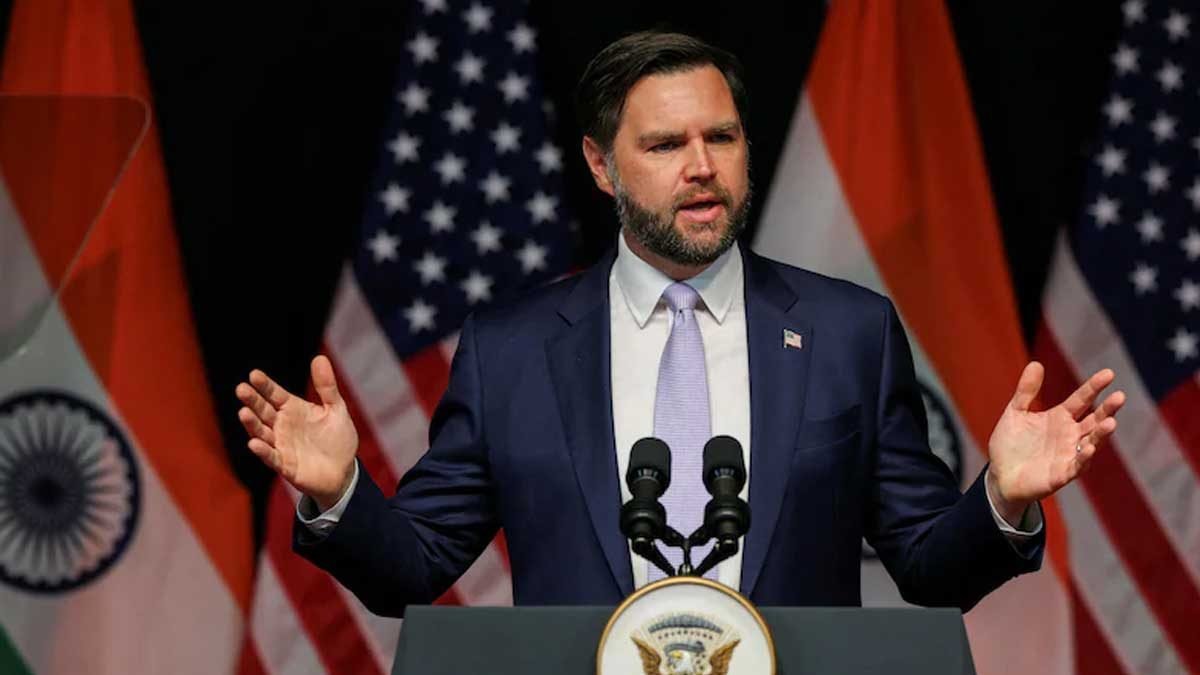
JD Vance, Vice President of the United States, has said that any potential confrontation between Washington and Tehran would not evolve into a prolonged conflict similar to the wars in Iraq and Afghanistan, arguing that the strategic objectives and circumstances surrounding Iran are fundamentally different.
Speaking to USA Today on June 9, Vance expressed confidence in the Trump administration’s approach toward Iran and said he believes current policies will ultimately achieve their objectives.
“I think we will be successful,” Vance said. “If diplomacy ultimately fails, the president has additional tools available to him.”
The vice president suggested that the United States remains committed to pursuing a diplomatic solution but made clear that alternative options remain available if negotiations do not produce the desired outcome.
Vance also predicted that discussions about a possible military confrontation between the United States and Iran would no longer dominate international headlines a year from now, signaling his belief that the current crisis will eventually be resolved.
According to Vance, the central objective of US policy remains preventing Iran from obtaining a nuclear weapon. He argued that as long as that objective remains clearly defined, the situation is unlikely to develop into a large-scale, open-ended military campaign similar to previous American interventions in the Middle East.
His comments come amid heightened tensions between Washington and Tehran and continued international attention on Iran’s nuclear program, regional security concerns, and ongoing diplomatic efforts aimed at preventing further escalation.
The remarks also reflect a broader debate within the United States over how to address Iran’s nuclear activities while avoiding another costly military engagement in the region. The wars in Iraq and Afghanistan remain deeply influential in American foreign policy discussions, often serving as cautionary examples of conflicts that expanded far beyond their original objectives.
While Vance emphasized confidence in diplomacy, his reference to additional presidential “tools” underscores that military, economic, and political pressure options remain part of Washington’s strategy should negotiations fail.
Iranian officials had not publicly responded to Vance’s latest comments at the time of publication.
The statement highlights the delicate balance currently facing US policymakers: maintaining pressure on Iran’s nuclear program while seeking to avoid a broader regional conflict that could further destabilize the Middle East and impact global security and energy markets.