
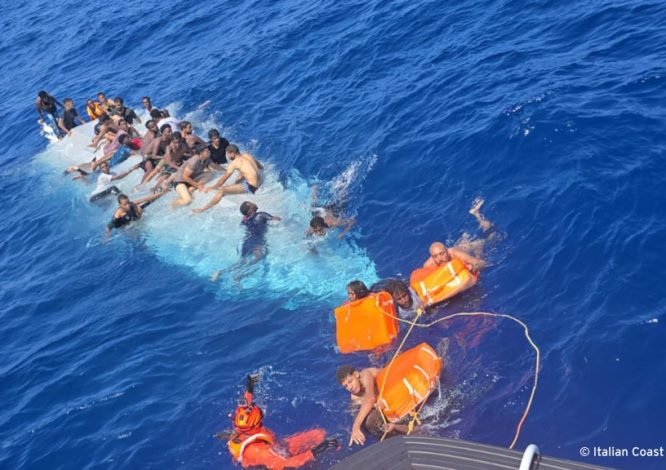
At least 10 people have died after a migrant boat capsized in the Mediterranean Sea near Malta, according to the Italian Coast Guard, in the latest tragedy along one of the world’s deadliest migration routes.
Italian authorities said the bodies of 10 migrants were recovered from the water after the vessel overturned approximately 84 kilometers south-east of Malta. Rescue operations remain ongoing as officials continue searching for additional passengers who may still be missing.
Forty-eight migrants were rescued by a fishing vessel operating in the area before being transferred to rescue authorities. Officials have not yet confirmed whether all passengers on board have been accounted for.
According to preliminary reports, the boat was carrying around 60 migrants and had departed from the coast of Libya, a major departure point for migrants attempting to reach Europe through the central Mediterranean route.
Authorities have not released the nationalities of the victims, nor have they determined the exact cause of the accident. Investigators are expected to examine weather conditions, the vessel’s condition, and possible overcrowding as part of the inquiry.
Following a request from Maltese authorities, Italy deployed a naval patrol vessel to assist in search-and-rescue efforts, highlighting the cross-border nature of migration emergencies in the Mediterranean.
The central Mediterranean remains one of the busiest and most dangerous migration corridors in the world. Every year, thousands of migrants and asylum seekers risk the journey from North Africa to Europe aboard overcrowded and often unseaworthy boats.
Many of those making the crossing are fleeing conflict, persecution, poverty, economic hardship, or political instability in their home countries. Libya has become one of the primary launching points for these journeys despite ongoing instability within the country itself.
Over the past decade, the European Union has invested heavily in migration-control initiatives aimed at reducing irregular crossings. European authorities have worked closely with Libyan institutions, including the Libyan Coast Guard, to strengthen border controls and intercept migrant vessels before they reach European waters.
According to EU figures, hundreds of millions of euros have been allocated to migration management and border-security programs in Libya since 2015. Italy has also supported training and equipment programs for Libyan maritime forces as part of broader efforts to curb migrant departures.
Despite these measures, deadly shipwrecks continue to occur with alarming frequency. Humanitarian organizations argue that while border enforcement has intensified, safe and legal migration pathways remain limited, leaving many migrants with little choice but to attempt dangerous sea crossings.
The latest disaster near Malta serves as another reminder of the continuing human toll of migration across the Mediterranean. Behind every casualty figure are individuals and families seeking safety, opportunity, or a new beginning—many of whom never reach their destination.
As rescue operations continue, the tragedy is likely to renew debate across Europe about migration policy, humanitarian obligations, and the persistent risks faced by those attempting one of the world’s most perilous journeys.