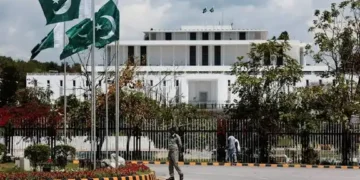


Pakistan’s Supreme Court has upheld the death sentences of two men convicted in one of the country’s most notorious sexual violence cases, rejecting their final appeals and bringing a years-long legal process closer to conclusion.
According to reports, 28-year-old Abid Malhi and 33-year-old Shafqat Ali were found guilty of the gang rape of a French woman of Pakistani origin in September 2020. The two men were also convicted of kidnapping, robbery, and terrorism-related offenses connected to the attack.
An anti-terrorism court initially sentenced both men to death in 2021, but the appeals process continued for several years before reaching the Supreme Court.
The assault took place on the night of September 9, 2020, along the Lahore-Sialkot motorway after the victim’s vehicle reportedly ran out of fuel on a deserted stretch of road.
Court documents stated that the attackers smashed the vehicle’s window, forced the woman out at gunpoint, and sexually assaulted her in front of her three young children. They then stole cash, jewelry, and bank cards before fleeing the scene.
Pakistani police later identified and arrested the suspects using mobile phone records, DNA evidence, and field investigations. During the trial, the victim identified the attackers, and one of the defendants reportedly confessed during the investigation.
The case triggered widespread public anger and became one of the most controversial criminal cases in recent Pakistani history. Demonstrations, media coverage, and public debate intensified calls for stronger action against sexual violence and better protection for women.
The controversy deepened when a senior Lahore police official publicly questioned why the victim had been traveling at night without a male companion. The remarks sparked outrage among women’s rights advocates, who condemned the comments as an example of victim-blaming.
Human rights organizations argue that the case highlighted broader challenges facing survivors of sexual violence in Pakistan, where many victims choose not to report crimes because of social stigma, family pressure, and concerns about the justice system.
NIMRUZ ANGLE
The significance of the ruling extends beyond the punishment of two convicted offenders. The case became a national test of Pakistan’s ability to investigate, prosecute, and adjudicate serious crimes against women under intense public scrutiny. The court’s decision is likely to be viewed as a benchmark for how the justice system responds to high-profile cases involving gender-based violence.
FINAL ANALYSIS
The Supreme Court’s decision marks a major judicial milestone in a case that profoundly shaped public debate about women’s safety in Pakistan. While many observers view the ruling as a strong signal against sexual violence, activists emphasize that lasting progress will depend on broader reforms, including improved victim protection, more effective law enforcement, and cultural changes that encourage survivors to seek justice without fear of stigma or discrimination. The case remains a powerful reminder of the challenges surrounding gender-based violence and accountability in South Asia.