
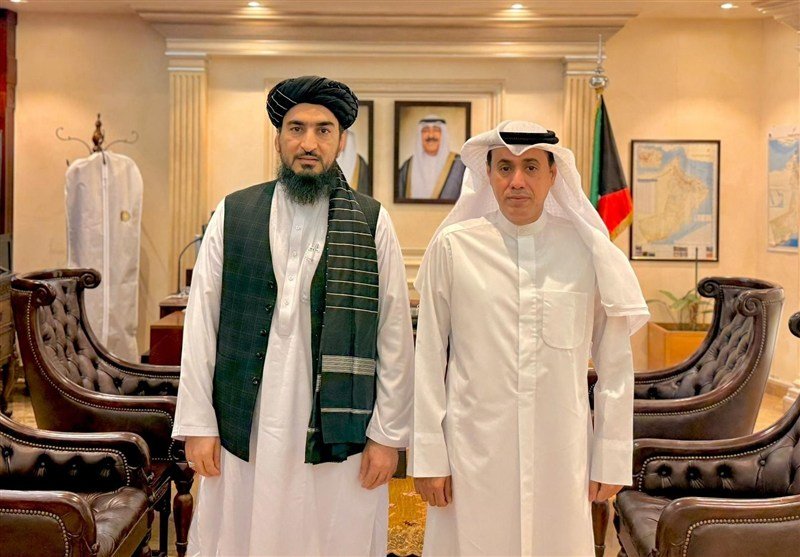
Afghanistan’s embassy in Kuwait has reportedly been transferred to a Taliban-appointed diplomat, marking another significant development in the group’s ongoing effort to expand its diplomatic presence overseas.
Sources familiar with the matter told Afghanistan International that Mawlawi Mohammad Shafiq Khatib has formally assumed his duties as the Taliban’s representative in Kuwait, replacing Sayed Javid Hashemi, who had served as ambassador under the former Afghan republic.
According to available information, Khatib previously held senior positions within the Taliban’s Foreign Ministry, including roles overseeing consular affairs and border-related matters.
The development comes as the Taliban continue a broader campaign to gain control of Afghan diplomatic missions abroad. Since returning to power in 2021, the group has gradually expanded its influence over embassies and consulates in several countries across Asia, the Middle East, and other regions.
Taliban Foreign Minister Amir Khan Muttaqi has previously stated that the administration maintains diplomatic relations with around 20 countries and that Taliban-appointed diplomats are already working in a number of Afghan missions overseas.
The transfer of the embassy in Kuwait occurs amid ongoing international debate over engagement with the Taliban. While no formal recognition has been granted by most countries, practical diplomatic contacts between the Taliban and regional governments have steadily increased.
Critics argue that handing diplomatic missions to Taliban representatives without addressing concerns related to human rights, restrictions on women, and political inclusion risks contributing to the gradual normalization of the group’s rule.
Supporters of engagement, however, contend that maintaining diplomatic channels is necessary to provide consular services for Afghan citizens abroad and to manage bilateral relations on issues such as migration, trade, and regional cooperation.
The development also reflects evolving relations between the Taliban and Gulf states. In recent months, the Taliban have pursued deeper engagement with countries across the Gulf region while simultaneously strengthening ties with Iran, Russia, and Central Asian states as part of a broader effort to reduce political isolation.
Despite increasing diplomatic contacts, the Taliban remain largely unrecognized internationally. Afghanistan’s seat at the United Nations continues to be held by representatives appointed by the former Afghan government, and the overwhelming majority of countries have not formally recognized the Taliban administration.
NIMRUZ ANGLE
The significance of the Kuwait embassy transfer extends beyond a routine diplomatic appointment. It demonstrates the Taliban’s continued success in gaining practical control over Afghanistan’s foreign representation, even without achieving formal international recognition. The distinction between diplomatic engagement and legal recognition is becoming increasingly blurred as more countries choose functional cooperation over political endorsement.
FINAL ANALYSIS
The handover of Afghanistan’s embassy in Kuwait represents another step in the Taliban’s gradual expansion of diplomatic influence. While the move does not amount to formal recognition, it reflects a broader trend in which regional governments are increasingly willing to engage with Taliban-appointed officials for practical and administrative reasons. As the Taliban continue to consolidate control over diplomatic missions abroad, the debate over legitimacy, recognition, and international engagement is likely to intensify both within Afghanistan and among international stakeholders.