
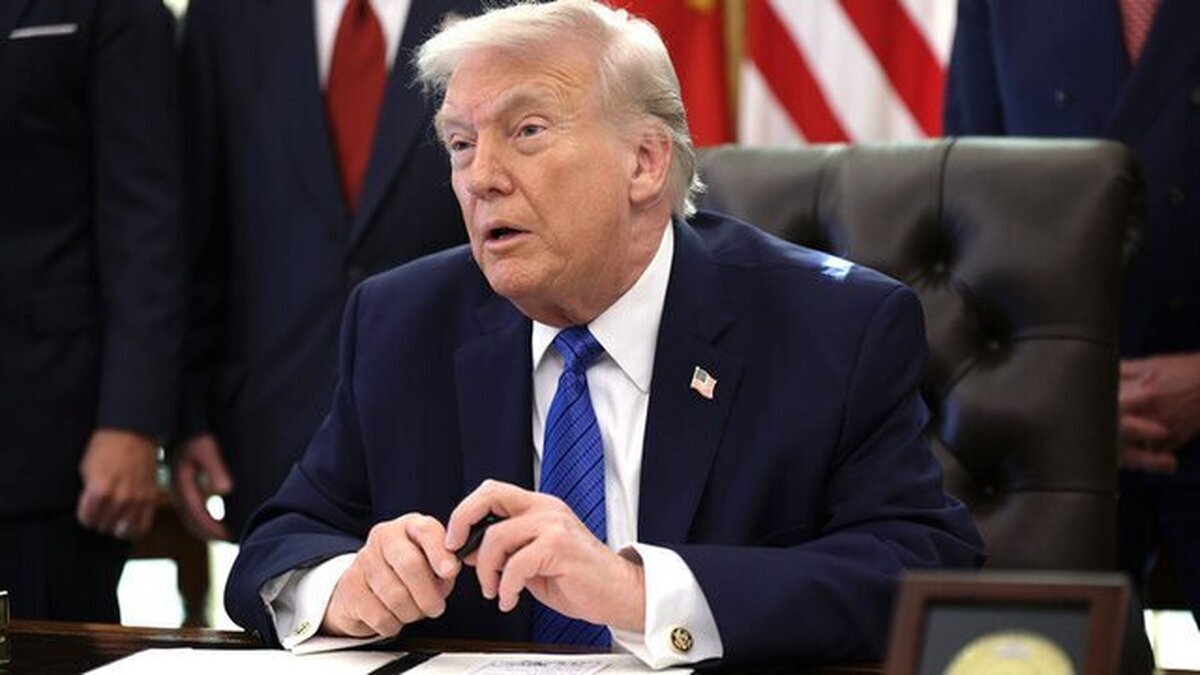
The Washington Post has reported that officials in Donald Trump’s administration are pursuing a plan to print a 250-dollar banknote featuring the image of the US president.
According to the report, the proposal is linked to celebrations marking the 250th anniversary of the founding of the United States.
Current US law prohibits placing living individuals on American currency, meaning such a proposal would require approval from Congress before it could move forward.
The Washington Post reported that Treasury Department appointees have repeatedly pressured the Bureau of Engraving and Printing since last year to prepare prototype designs for a 250-dollar bill featuring Donald Trump.
If implemented, it would mark the first time in more than 150 years that a living person’s image appeared on official US currency.
Sources familiar with the matter said US Treasurer Brandon Beach and his senior adviser Mike Brown presented several experimental designs during August and September, including one placing Trump’s portrait at the center of the proposed 250-dollar note.
British artist Ayn Alexander, who is reportedly involved in the design, said the concept was developed with direct feedback and coordination from Donald Trump.
A spokesperson for the US Treasury Department stated that the Bureau of Engraving and Printing “conducts evaluations and planning in response to legislative proposals” and would begin preparations for a commemorative note if the proposal became law.
At the same time, four Treasury Department employees reportedly said Patricia “Patty” Soliman, director of the Bureau of Engraving and Printing, was removed from her position after expressing concerns and objections about the project.
According to reports, she warned that serious legal and technical barriers exist and that designing such a banknote could take years.
Separate reports have also suggested that 100-dollar notes bearing Donald Trump’s signature are currently being printed.
Analysts say issuing a 250-dollar bill without congressional approval would be impossible and that the proposal would require broad coordination with financial and security institutions in the United States.