
More than two years remain before the 2028 US presidential election, but potential contenders in both major parties are already beginning to position themselves for what could become a wide-open nomination cycle.
Recent activity by Democratic and Republican politicians suggests that the political groundwork for 2028 is already underway, even though the next presidential primary campaigns remain some distance away.
CNN reported that several politicians who could eventually seek the presidency are increasing their visibility as the November 2026 midterm elections approach. Some are traveling to states that will matter in the midterms and could also play important roles in the presidential primary calendar, while others are using speeches, policy positions and campaign appearances to build relationships with voters and party activists.
On the Democratic side, former Vice President Kamala Harris has recently increased her appearances on behalf of Democratic candidates ahead of the midterms.
Harris appeared in Michigan alongside Democratic Senate candidate Abdul El-Sayed and is expected to participate in Democratic events in other states. She has not announced a 2028 presidential campaign and has repeatedly said that her immediate focus is the 2026 elections.
During an appearance in Michigan on September 23, Harris again said she had not decided whether she would run in 2028, while emphasizing that the outcome of the 2028 contest will depend in part on what happens in 2026.
Her uncertainty is already affecting the calculations of other potential Democratic contenders.
California Governor Gavin Newsom, who is considering a 2028 campaign, told CNN that he would not run if Harris enters the race. His statement illustrates how decisions that have not yet been formally made are already influencing the potential Democratic field.
Representative Alexandria Ocasio-Cortez has also spoken more openly about the possibility of seeking the presidency in 2028. She has not announced a candidacy, but her recent public comments have intensified attention around her potential role in the next Democratic primary.
An early national poll discussed by CNN showed Harris at 17 percent among Democratic voters asked about potential 2028 nominees, followed by Pete Buttigieg at 16 percent and Ocasio-Cortez and Newsom at 14 percent each.
The figures are an early measurement rather than a forecast of the eventual Democratic nominee. CNN’s chief data analyst Harry Enten emphasized that the field remains unusually unsettled, with no candidate holding a dominant position at this stage.
The Republican side is also beginning to attract attention, particularly around the question of who could become the party’s presidential standard-bearer after Donald Trump.
Vice President JD Vance and Secretary of State Marco Rubio have repeatedly been discussed as potential 2028 contenders. Their positions within the Trump administration have placed both men in prominent national roles, while their political activities have increasingly extended beyond their formal government responsibilities.
A March 2026 CPAC straw poll, which was not a scientific public opinion survey, showed Vance receiving 53 percent and Rubio 35 percent among attendees asked about the Republican presidential nomination. The figures reflected the preferences of that particular conference audience rather than the broader Republican electorate.
Trump himself has also acknowledged that his political future is connected to the next presidential cycle.
Speaking at the United Nations General Assembly on September 22, Trump said he would remain in office for another two and a half years and emphasized that he was not running in the next election.
Under the 22nd Amendment to the US Constitution, no person may be elected president more than twice. Trump was elected in 2016 and again in 2024, meaning the constitutional term limit applies to his presidential eligibility for another election.
That makes the 2028 Republican contest fundamentally different from a normal open-ended presidential race: the party will be choosing a candidate to succeed a sitting president who cannot seek another elected term.
Before that process begins in earnest, however, the 2026 midterm elections will be the immediate political test.
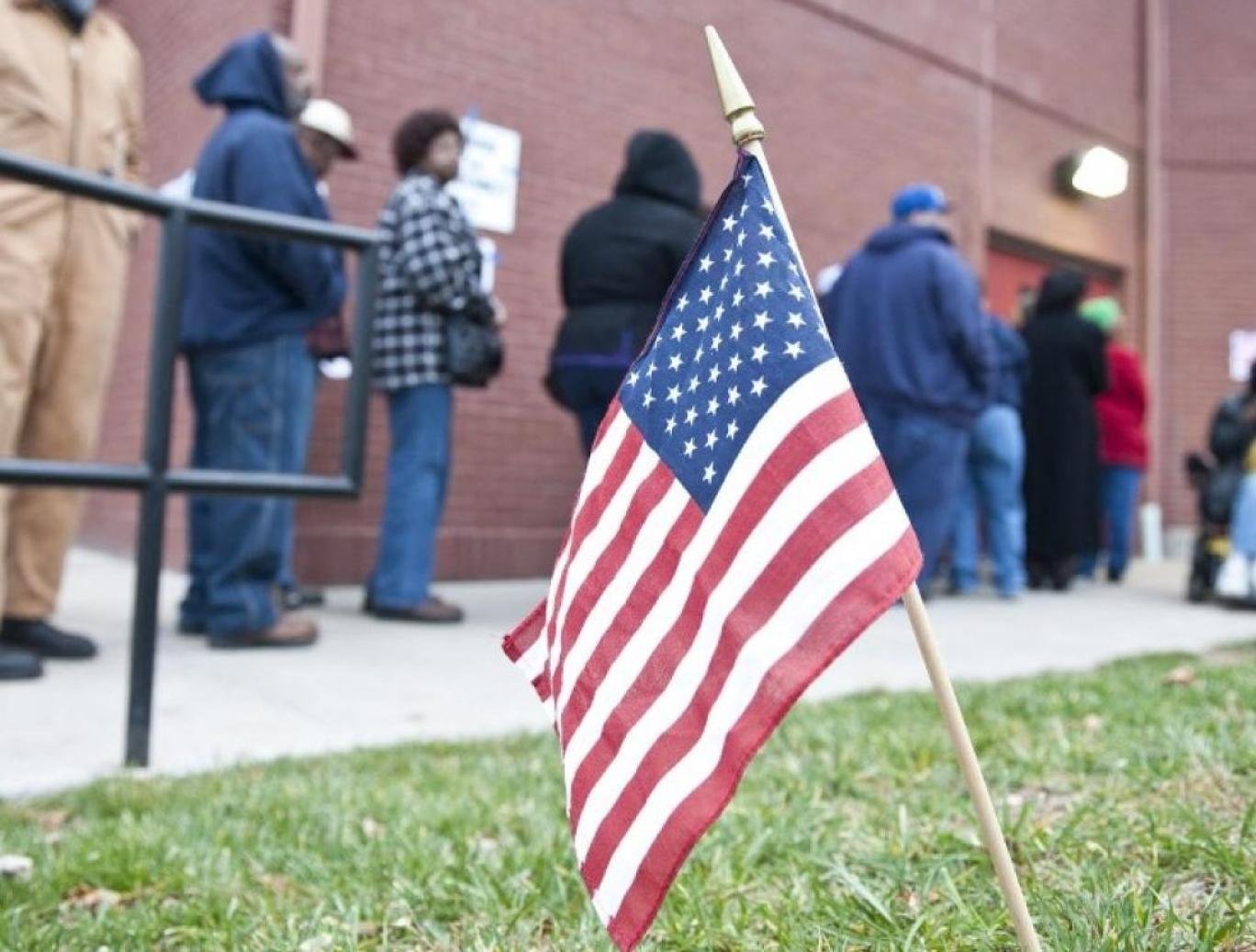
The November elections will determine the next composition of Congress and provide a measure of the political environment facing the Trump administration and both major parties. The results could influence how potential 2028 candidates position themselves, which issues they emphasize and whether they decide to enter the presidential race.
For now, what is taking place in the United States is not yet a formal presidential contest. It is an early phase of political positioning, fundraising, voter outreach, policy development and internal party calculations.
The names receiving attention today should therefore not be treated as a final list of 2028 candidates. Presidential primaries remain far away, several prominent politicians have not declared their intentions, and the political landscape can change substantially before voting begins.
The emerging 2028 competition is nevertheless already revealing two different questions for the parties: Democrats are navigating an unusually open field without a declared nominee, while Republicans are beginning to consider the post-Trump succession within a party still shaped by the president’s political influence.