
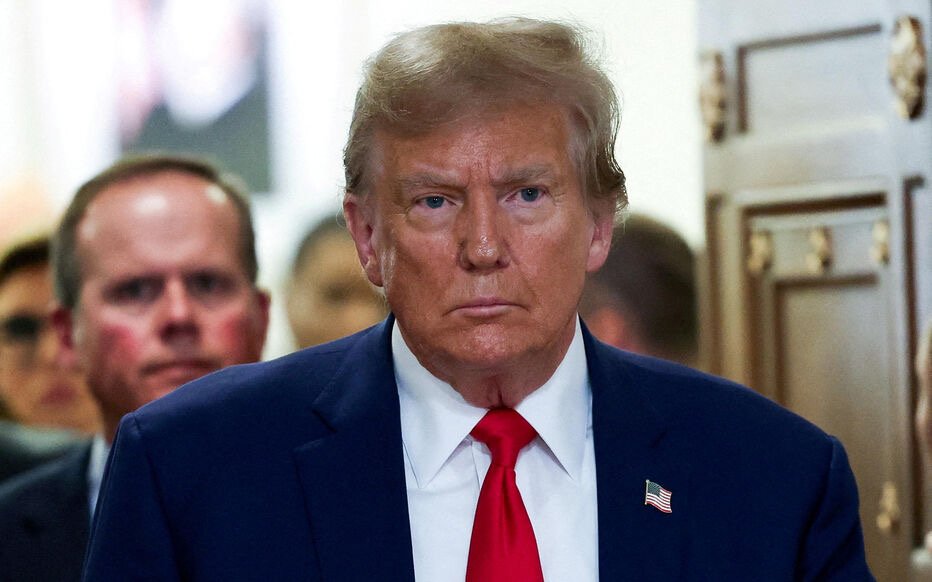
Senior advisers to US President Donald Trump have privately discussed the possibility that the war with Iran could continue until the end of his presidency in January 2029, according to The Wall Street Journal, a scenario that contrasts sharply with Trump’s public claims that the conflict will end soon.
According to the newspaper, Vice President JD Vance, Secretary of State Marco Rubio and other senior officials have told Trump in meetings in the Oval Office and Situation Room that Iran could continue resisting a US naval blockade and other forms of military pressure.
US officials cited by the newspaper said such a scenario could allow the conflict to continue through the end of Trump’s term and potentially beyond the January 2029 inauguration of his successor.
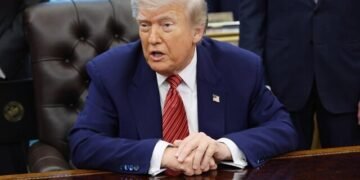
The private assessments contrast with Trump’s public statements. On Wednesday, he said the war would end “immediately” after the November midterm elections and claimed that Iran no longer had the ability to continue fighting.
Trump has also repeatedly said Iranian forces have been defeated and that the Iranian government would soon surrender. However, people close to the president reportedly say he wants a quick end to the war while also supporting a prolonged campaign of economic pressure against Tehran.
The conflict has now entered its seventh month. According to The Wall Street Journal, 18 US service members have been killed during the fighting so far.
The Trump administration is meanwhile preparing a strategy combining a naval blockade with intensified economic sanctions. The stated objective is to pressure Iran into dismantling its nuclear program without launching a broader military operation.
Treasury Secretary Scott Bessent has described the strategy, referred to as an “economic expulsion operation,” as an alternative to expanding military operations.
White House spokesperson Olivia Wells has also said Trump has destroyed Iran’s military capabilities and intends to increase pressure on the Iranian economy through a naval blockade and extensive sanctions. Asked about the timing of the war’s end, she said only President Trump knows what he will do and when.
Vance declined last week to provide a specific timeline for ending the conflict. Despite the continuing blockade and sporadic attacks, he also avoided describing the current situation as a “war.”
Vance said providing a “made-up timeline” would be irresponsible because Iran could exploit such information. He also accused Tehran of violating commitments and continuing attacks on commercial vessels.
US military preparations also point toward a longer confrontation. The Wall Street Journal previously reported that Defense Secretary Pete Hegseth had extended the missions of some US forces deployed in the Middle East through 2027, preserving military options if the conflict continues.
The Pentagon is also considering extending the missions of some air-defense units without setting a firm end date. These units have been deployed at various locations around the Persian Gulf to intercept missiles and drones.
About 50,000 US troops are currently stationed across the region.
From a Nimruz perspective, the gap between Trump’s public promises and the private assessments attributed to his senior advisers is strategically significant. It suggests that Washington is, at least in its internal planning, preparing for a substantially longer confrontation than the president’s public statements imply.
If economic pressure and military containment fail to force Tehran to retreat, maintaining the current posture could prolong the US military presence in the Middle East and increase the risk of further escalation. The central challenge for the Trump administration would then shift from delivering a quick political end to the conflict to managing a potentially prolonged regional confrontation.