
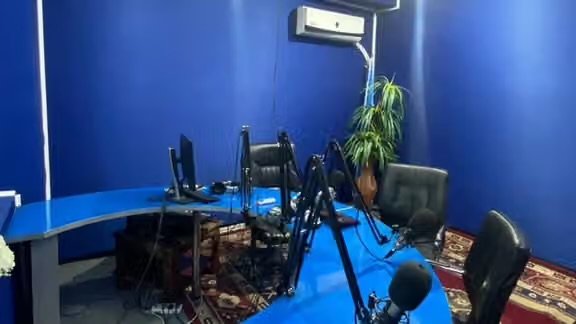
Taliban authorities have suspended the operations of Voice of Reform Radio in Kabul and sealed the broadcaster’s office, according to a statement issued by the radio on Sunday.
The station said a delegation from the Taliban Ministry of Justice visited its office and ordered its activities to be halted. The office has since been sealed, while the radio’s broadcasting operations remain suspended.
Voice of Reform Radio said the action was linked to concerns raised by the Taliban Ministry of Justice regarding its broadcasting license and the name of the media outlet. The station said it is pursuing the matter with the Taliban ministries of Information and Culture and Justice in an effort to address the concerns and resume broadcasting.
The radio also stressed that it has been privately owned by an individual for the past seven years and has no organizational, institutional, political or party affiliation.
The station previously operated under the name Jamiat-e-Eslah. It changed its name after Taliban intelligence authorities banned the activities of Jamiat-e-Eslah, along with several other political and civic organizations, in December 2022.
The suspension comes amid broader restrictions facing Afghan media, including controls over broadcasting content, media operations, naming and interaction with Taliban institutions. In this case, the radio itself has attributed the suspension to licensing and naming concerns and says it is seeking a resolution through discussions with Taliban authorities.
The significance of the case extends beyond the closure of a single radio station. The dispute over the broadcaster’s name and previous identity suggests that scrutiny of Afghan media can also extend to an outlet’s institutional history and perceived associations, rather than focusing solely on its current editorial content.
Whether Voice of Reform Radio is allowed to resume operations after addressing the authorities’ concerns could provide an indication of how much space remains for privately owned media with politically sensitive histories. If the suspension continues, however, it is likely to add to concerns over the already restricted environment for independent media in Afghanistan.