
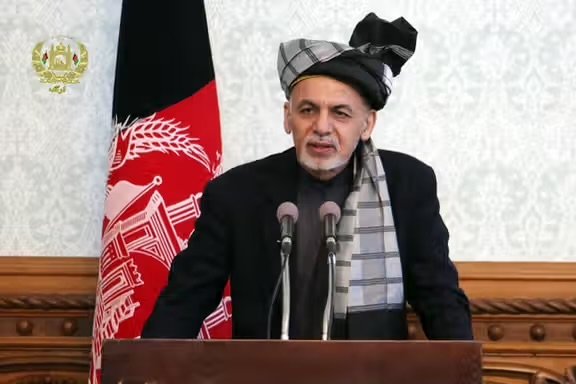
Former Afghan President Ashraf Ghani has sharply criticized the Taliban’s management of the deadly floods in Nuristan, saying the authorities must answer public questions about the repeated occurrence of similar disasters and the apparent lack of preparedness to reduce their impact.
In a statement expressing sympathy for the victims’ families, Ghani said Afghans have the right to ask what lessons were learned from previous natural disasters, including the devastating floods in Kunar Province, and why sufficient preventive measures were not implemented.
“Some may believe that people have no right to ask such questions,” Ghani said, adding that these concerns remain legitimate and deserve clear answers from those in power.
The deadly floods struck Nuristan on Monday, causing extensive human and material losses. Local reports indicate that several Taliban local officials, including the mayor of Parun, were among those killed. Hundreds of homes, public infrastructure and agricultural lands were also destroyed.
Ghani described the Parun floods as one of eastern Afghanistan’s most devastating natural disasters in recent years, following major earthquakes and flooding in Kunar. He urged Afghan citizens, business leaders and members of the Afghan diaspora to mobilize support for affected communities.
The former president also identified climate change and widespread deforestation as major factors worsening the impact of floods. He warned that illegal logging continues in Kunar and Nuristan with the support of what he described as an “internal mafia,” while arguing that neighboring Pakistan has expanded its own forest development efforts.
Calling the Nuristan disaster a “wake-up call” for Afghanistan, Ghani urged authorities to halt deforestation, launch large-scale reforestation programmes and strengthen disaster prevention and emergency preparedness.
The Taliban have not publicly responded to Ghani’s criticism or his comments regarding the government’s handling of the Nuristan floods.
The exchange highlights the broader debate over disaster preparedness in Afghanistan, where increasingly frequent extreme weather events, environmental degradation and limited emergency response capacity continue to leave vulnerable communities at significant risk.