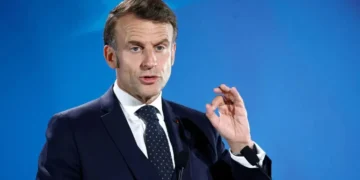

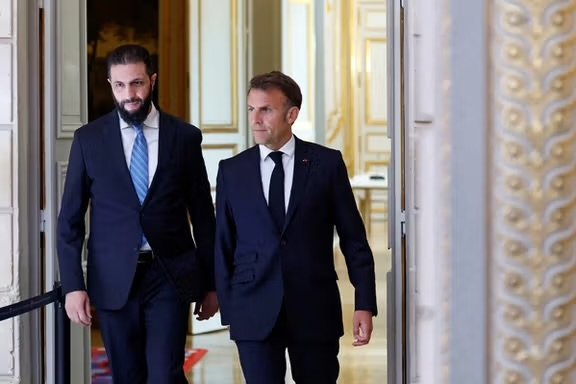
French President Emmanuel Macron is expected to travel to Damascus in the coming days for official talks with Syria’s transitional president, Ahmad al-Sharaa, in what could become a landmark moment in relations between the two countries after more than a decade of diplomatic estrangement.
The Syrian government announced that Macron will discuss expanding political and economic cooperation, regional developments and bilateral relations with al-Sharaa. The French presidency later confirmed the planned visit, saying Macron will lead a delegation of senior government officials, investors and business executives.
According to the Élysée Palace, the discussions will also cover France’s potential role in Syria’s reconstruction and broader issues of mutual interest as Damascus seeks to rebuild international partnerships following the country’s political transition.
If the visit takes place as planned, Macron will become the first French president to visit Syria since Nicolas Sarkozy traveled to Damascus in 2008. Relations between Paris and Damascus deteriorated sharply after the Syrian government’s violent crackdown on anti-government protests in 2011 and allegations of chemical weapons attacks against civilians, leading to the suspension of diplomatic relations.
The planned visit comes only months after Ahmad al-Sharaa traveled to Paris at Macron’s invitation for his first official visit to Europe. Their talks focused on Syria’s political transition, post-war reconstruction, counterterrorism cooperation and the future of international sanctions.
Al-Sharaa assumed power after an opposition coalition led by Hayat Tahrir al-Sham seized control of Damascus in December 2024, bringing more than five decades of Assad family rule to an end. Since then, Syria’s transitional authorities have sought to restore relations with Arab and Western countries while encouraging foreign investment to support reconstruction.
Beyond its diplomatic symbolism, Macron’s expected visit may signal a gradual shift in Europe’s approach toward Syria following the country’s political transition. However, the pace of future cooperation is likely to depend on progress in Syria’s transition process, security conditions on the ground and future European Union decisions regarding sanctions.