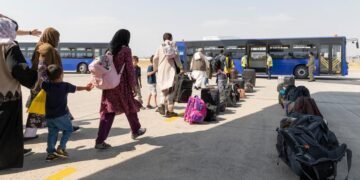

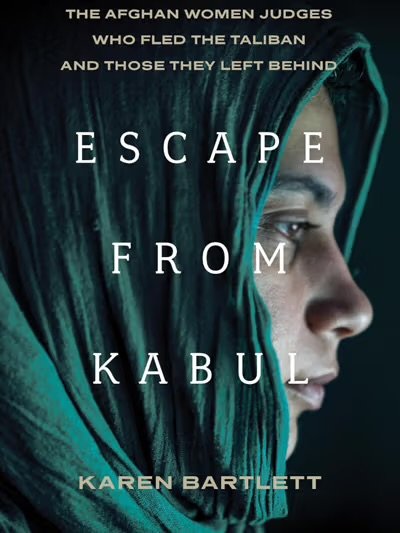
British author Karen Bartlett has won the 2026 Orwell Prize for Political Writing for her book Escape from Kabul, which documents the rescue and relocation of nearly 200 Afghan women judges and their families following the Taliban’s return to power in 2021.
Announcing the award, the Orwell Foundation paid tribute to Afghanistan’s women judges for their role in combating corruption and handling cases involving violence against women and children during the previous two decades. The foundation noted that after the Taliban regained control of Afghanistan, the judges faced serious threats because thousands of prisoners—including people they had sentenced—were released.
Accepting the award, Bartlett said the honor belonged not to her but to Afghanistan’s women judges, whom she described as “extraordinarily brave.” She also highlighted the current situation facing Afghan women and girls, saying they have been deprived of fundamental rights, including access to education, employment and freedom of movement.
Rohan Silva, chair of the Orwell Prize judges, described the book as “powerful, compassionate and beautifully written,” saying it successfully tells a story of global importance. Part of the book follows the experience of Reyhana Attayee, one of Afghanistan’s women judges, during her work in Nangarhar Province.
According to the International Association of Women Judges, nearly 180 of Afghanistan’s approximately 260 women judges have so far been relocated with their families to safe countries, including the United States, the United Kingdom, Canada, Germany, Australia, Brazil and several other European nations.
However, around 45 women judges are still considered to be at serious risk. Some remain in hiding inside Afghanistan, while others are living in Pakistan with expired visas and face the possibility of deportation.
Following their return to power, the Taliban dissolved Afghanistan’s previous judicial system and dismissed all women judges. The group has also imposed wide-ranging restrictions on women’s education, employment and public participation, drawing widespread criticism from international organizations and human rights groups, some of which have described the policies as constituting “gender apartheid.”