
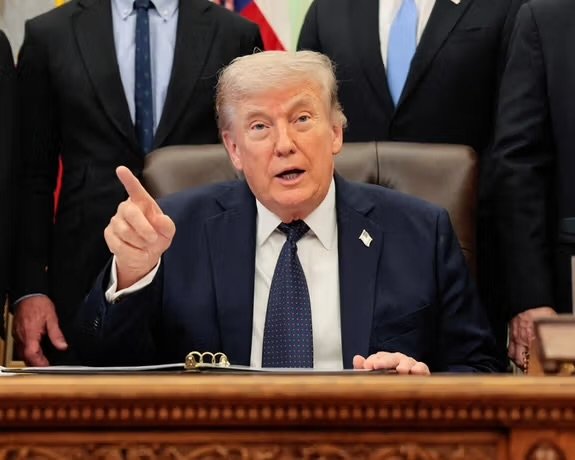
U.S. President Donald Trump has sharply defended the recently announced memorandum of understanding between Washington and Tehran, describing critics of the agreement as “fools” and “jealous people.”
In a post on Truth Social, Trump argued that opponents who claim he has not been tough enough on Iran are ignoring positive economic developments following the agreement.
“These fools who think I haven’t been tough enough on Iran, while the stock market is already at a record high and oil prices are falling, are either jealous, bad people, or fools,” Trump wrote.
The president pointed to improving market conditions as evidence that the agreement is benefiting the United States and contributing to economic stability and lower geopolitical tensions.
However, criticism of the memorandum has not come exclusively from Democrats. Several prominent Republicans have also expressed concerns about the agreement and its long-term implications.
Among them is former Vice President Mike Pence, who questioned both the provisions included in the memorandum and those he believes were left out.
Speaking to Fox News, Pence said the agreement was “disturbingly reminiscent” of policies that his administration had opposed during the Obama-era nuclear deal with Iran.
“This memorandum is worryingly similar to the appeasement approach we rejected in the Obama nuclear agreement and the same approach President Biden attempted to revive,” Pence said.
His remarks highlight growing divisions within Republican circles over the direction of U.S. policy toward Iran.
Supporters of the agreement argue that it reduces the risk of military confrontation, improves economic confidence and creates a framework for further negotiations. Critics, meanwhile, contend that the details of the deal and its enforcement mechanisms require far closer scrutiny.
The debate is expected to intensify in the coming months as lawmakers, political leaders and foreign policy analysts examine the contents of the memorandum and its implications for regional security, U.S. interests and future relations with Iran.
The disagreement between Trump and some influential Republicans suggests that the Iran agreement could become one of the most significant foreign policy debates in Washington ahead of the next phase of negotiations.