
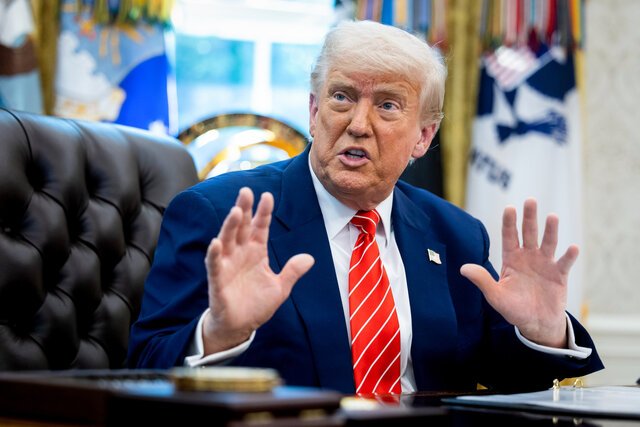
U.S. President Donald Trump has once again stressed that Iran must never be allowed to obtain a nuclear weapon, describing the issue as the central pillar of the emerging agreement between Washington and Tehran.
Speaking on the sidelines of the G7 summit, Trump said he had insisted on including clear language in the agreement that would prohibit Iran not only from developing nuclear weapons but also from purchasing or acquiring them in any form.
“The only thing that really matters to me is that Iran never has a nuclear weapon, and that is clearly and explicitly stated in the agreement,” Trump said.
The U.S. president warned that if Iran were ever to obtain a nuclear weapon, the consequences would be severe.
He stated that Tehran would face “unbelievable consequences” if it violated the commitments outlined in the agreement and reiterated that preventing a nuclear-armed Iran remains Washington’s primary strategic objective.
Trump also argued that concerns over Iran’s nuclear ambitions were a key reason behind U.S. involvement in the recent crisis and support for diplomatic efforts aimed at resolving tensions.
During a separate meeting with the Emir of Qatar on the margins of the G7 gathering, Trump expressed optimism about the future of negotiations with Iran.
According to the U.S. president, a second phase of talks will begin following the recently announced memorandum of understanding between the two sides.
He suggested that the next stage of negotiations would be easier than the first round, indicating confidence that progress could continue in the coming weeks.
Trump’s comments come as the recently announced understanding between Washington and Tehran remains under intense international scrutiny.
Diplomatic and political observers are closely watching developments as both sides prepare for further negotiations and work toward finalizing the details of a broader agreement.
While officials from both countries have signaled progress, many aspects of the proposed framework remain undisclosed, and discussions are expected to continue before any final implementation takes place.
The future of the agreement is likely to have significant implications for regional security, global energy markets and broader U.S.-Middle East relations.