
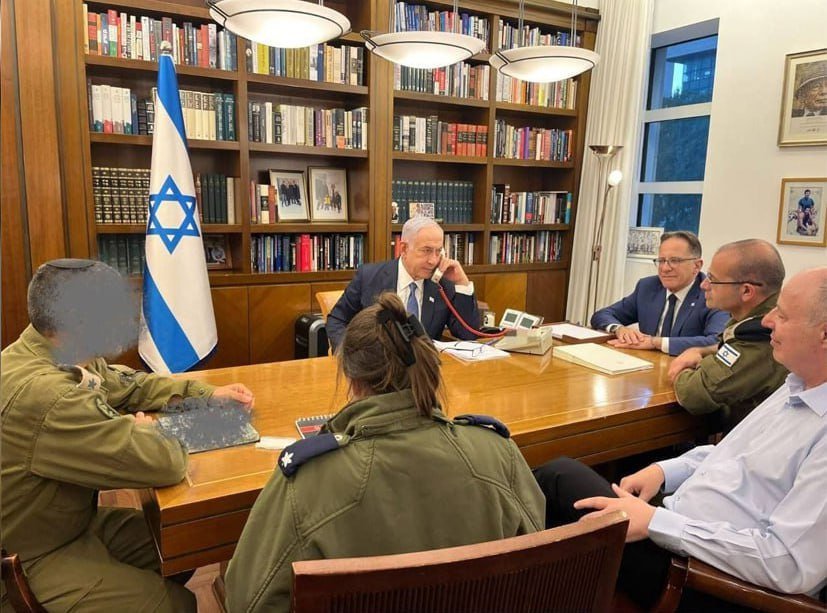
The office of Israeli Prime Minister Benjamin Netanyahu has announced that US President Donald Trump discussed an emerging memorandum of understanding between Washington and the Islamic Republic of Iran that could serve as a gateway to renewed negotiations between the two sides.
According to a statement released by Netanyahu’s office, Trump briefed Israeli leaders on elements of a potential diplomatic framework currently taking shape between Washington and Tehran.
The statement stressed that Israel is not a party to the proposed memorandum. However, Netanyahu reportedly welcomed the commitments outlined by Trump regarding the conditions that would be required for any final agreement with Iran.
According to the Israeli government, those conditions include the removal of enriched nuclear material, the dismantling of Iran’s enrichment infrastructure, restrictions on the country’s missile program, and an end to Tehran’s support for regional proxy groups.
The disclosure comes amid growing speculation that the United States and Iran may be moving toward a new diplomatic framework aimed at restarting or advancing negotiations after months of tensions and uncertainty.
Recent public statements from both sides have reflected differing assessments of the talks. While American officials have suggested that progress toward an agreement is being made, Iranian authorities have maintained that no final deal has been reached and that significant issues remain unresolved.
Netanyahu’s office did not provide additional details about the legal or political nature of the proposed memorandum, nor did it specify when such an understanding could be finalized.
The development nevertheless highlights the continuing importance of Iran’s nuclear and regional policies in US-Israeli relations. It also suggests that Washington is seeking to keep Israel informed as diplomatic contacts with Tehran continue, even as Israeli officials remain outside the formal negotiating process.
Whether the emerging framework evolves into a broader agreement will likely depend on the ability of both Washington and Tehran to bridge longstanding disputes over nuclear activities, missile capabilities, sanctions, and regional security issues that have complicated previous diplomatic efforts.