
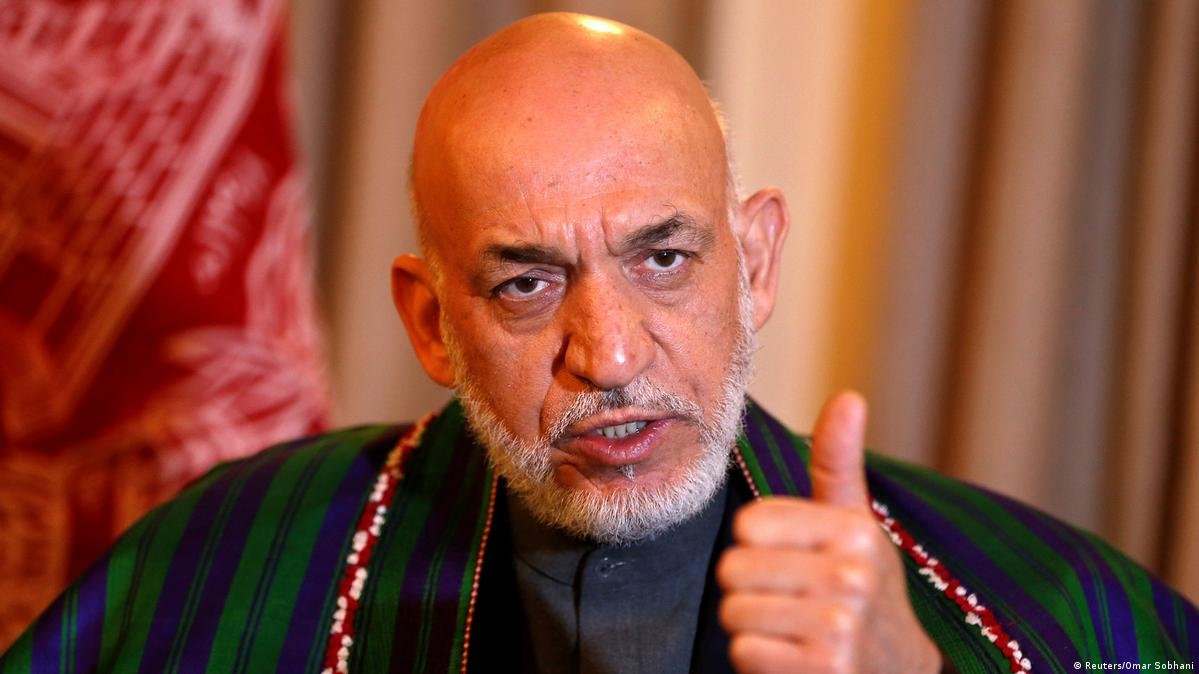
Former Afghan President Hamid Karzai has accused Pakistan of supporting extremism and using militant groups as a tool of foreign policy for more than four decades, arguing that the country’s current security challenges are a direct consequence of those policies.
In a statement published on X, Karzai responded to recent remarks made by a senior European Union official regarding security concerns in the region. He said Pakistan’s ongoing security problems are the result of what he described as long-term support for extremism aimed at advancing hostile objectives against Afghanistan.
“The current situation and security challenges facing Pakistan are the result of that country’s policy of supporting extremism and using it as a foreign policy instrument to pursue hostile goals against Afghanistan over the past four decades,” Karzai wrote.
He added that these policies contributed to widespread instability, violence, and human suffering in Afghanistan, which has endured decades of conflict involving regional and international actors.
Karzai also thanked European countries and the European Union for their humanitarian assistance to Afghanistan. At the same time, he urged European policymakers to consider what he called the “real roots” of regional insecurity and the role of external factors when assessing ongoing crises in South Asia.
His remarks came after Kaja Kallas, the European Union’s High Representative for Foreign Affairs and Security Policy, addressed regional security concerns during a joint appearance with Pakistan’s foreign minister. Speaking during the eighth round of the EU-Pakistan Strategic Dialogue in Islamabad, Kallas said recent tensions between Pakistan and the Taliban had generated serious humanitarian consequences and increased the risk of instability and extremism across the region.
“Pakistan has the right to defend itself and its people in accordance with international law, but in this situation, dialogue rather than airstrikes is the best way to reduce tensions and move out of the crisis,” Kallas said.
The EU-Pakistan meeting focused heavily on developments in Afghanistan and broader regional security challenges. The discussions reflected growing international concern about cross-border tensions, militant activity, and the potential impact of instability on neighboring countries.
Karzai also highlighted the long history of relations between Afghanistan and Europe, describing those ties as constructive and friendly for more than a century.
Karzai’s statement goes beyond a response to recent diplomatic remarks. It revives a longstanding Afghan criticism that regional instability cannot be understood without examining the historical role of state-backed militant networks and proxy conflicts. His comments also signal an effort to influence how European policymakers interpret current security developments in South Asia.
The exchange highlights competing narratives surrounding regional security. While European officials are focused on preventing escalation between Pakistan and the Taliban, Karzai argues that lasting stability requires addressing the deeper causes of extremism in the region. As security concerns continue to grow along Afghanistan’s borders, the debate over responsibility for instability is likely to remain a central issue in regional diplomacy and international engagement.