
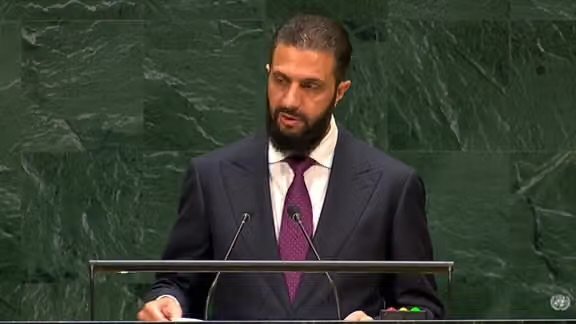
Syrian President Ahmed al-Sharaa used his address to the United Nations General Assembly to present Syria as a country emerging from years of war and international isolation, while making clear that sovereignty, territorial integrity and security remain central obstacles to the country’s transition.
“Syria is rising,” al-Sharaa said, describing a new phase focused on reconstruction, rebuilding state institutions and expanding Syria’s international relations.
He said Damascus now maintains relations with more than 100 countries and hosts more than 60 diplomatic missions. He also pointed to expanding cooperation with the European Union as evidence that Syria is regaining a place in the international system.
The speech comes after major changes in Syria’s international position since the fall of Bashar al-Assad’s government in December 2024. The United States repealed the Caesar Syria Civilian Protection Act in December 2025, while Washington formally rescinded Syria’s designation as a state sponsor of terrorism on August 24, 2026.
Those decisions have removed major elements of the sanctions architecture that had restricted Syria’s economic and financial reintegration. Targeted sanctions against certain individuals and entities linked to the former government and other actors remain in place.
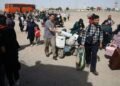
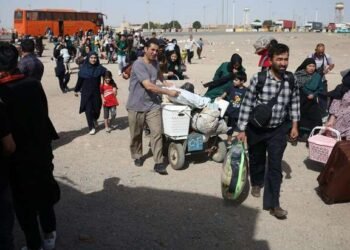
Al-Sharaa also highlighted the return of displaced Syrians, saying around 3.5 million refugees and internally displaced people had returned safely and with dignity to their areas. He said Damascus had begun a program aimed at ending refugee camps.
The return of displaced people is a significant indicator of changing conditions inside Syria, but reconstruction remains dependent on security, political stability, institutional development and economic recovery.
The Syrian president devoted particular attention to Israel and the Golan Heights.
Al-Sharaa reaffirmed Damascus’ position that the Golan Heights is Syrian territory and said Syria would not accept actions that violate its sovereignty or international law. The United Nations continues to regard the Golan as occupied Syrian territory, while the United States has recognized Israeli sovereignty over the territory since 2019.
Al-Sharaa also accused Israel of carrying out hundreds of air and artillery strikes and repeated incursions into Syrian territory since the fall of the Assad government. These figures were presented by the Syrian president and were not independently verified in his speech.
He argued that continued Israeli military activity conflicts with Syria’s effort to return to the international community and rebuild the country.
At the same time, al-Sharaa said Damascus has pursued direct discussions with Israel over security arrangements. He said the talks had at one stage reached roughly 90 percent agreement before, according to his account, Israel withdrew or introduced additional conditions.
In a separate appearance in New York on the sidelines of the UN General Assembly, al-Sharaa said Syria was prepared to continue diplomacy and discuss security arrangements, but insisted that the status of the Golan Heights was not open to negotiation. He also said Syrian-Israeli talks could eventually contribute to a lasting peace if security arrangements were achieved.
The broader message from al-Sharaa was therefore built around two parallel objectives: reintegrating Syria into the international system and defending Damascus’ claims over sovereignty and territory.
For the new Syrian leadership, the lifting of major US sanctions and renewed diplomatic engagement create opportunities for investment and reconstruction. At the same time, unresolved disputes with Israel, questions over security arrangements and the country’s internal political transition remain major challenges.
Al-Sharaa’s appearance at the UN was consequently both a diplomatic appeal and a presentation of Syria’s new political direction: Damascus wants to be seen as a state moving from war and isolation toward reconstruction and international engagement, while maintaining its claims over territory and demanding that its sovereignty be respected.