
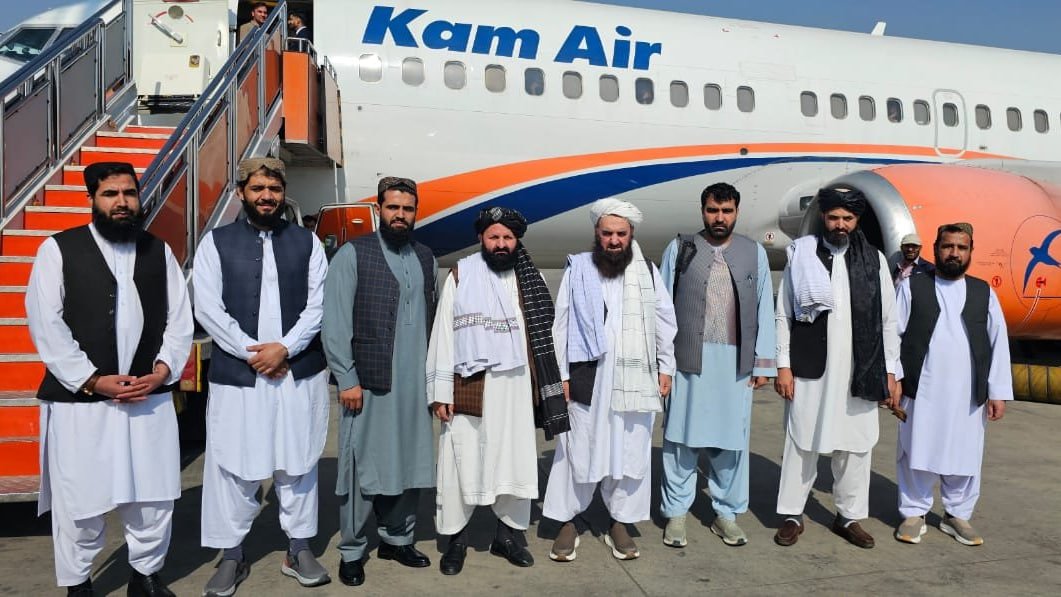
A Taliban Defense Ministry delegation has traveled to China to attend the 13th Xiangshan Forum, one of Asia’s prominent international gatherings on security and defense, highlighting the Taliban’s growing participation in regional diplomatic and security forums despite their continued lack of broad international recognition.
Latifullah Hakimi, the Taliban Defense Ministry’s inspector general, said Saturday, September 12, that he is leading the delegation.
Hakimi said Taliban representatives are expected to address the forum and participate in its sessions. They are also expected to meet delegations from various countries and discuss issues of mutual interest.
The 13th Xiangshan Forum is scheduled to take place from September 15 to 17 at the Beijing International Convention Center. Established in 2006 with a China-centered focus, the forum has developed into an international platform for discussions on security and defense issues.
The gathering was initially organized primarily as a security dialogue. In 2014, it was elevated to the level of a forum and has since brought together defense ministers and senior military and security delegations from various countries, including states close to China and Russia as well as representatives of NATO.
The Taliban delegation’s participation gives the trip significance beyond a routine diplomatic visit. The Taliban continue to face major obstacles to international recognition, but their presence at a high-level security forum provides another channel for direct engagement with foreign governments and security institutions.
For China, sustained engagement with the Taliban also fits into Beijing’s broader interest in maintaining direct channels with the authorities controlling Afghanistan, particularly on issues related to regional security and stability. Participation in a forum centered on defense and security creates an additional setting for those contacts.
For the Taliban, meetings with representatives from other countries could provide an opportunity to expand regional relationships and present their government as an established security actor in Afghanistan. However, participation in an international forum does not by itself amount to diplomatic recognition.
From Nimruz’s perspective, the political value of the visit will depend less on the Taliban delegation’s presence at the forum itself and more on what happens around it: the level of meetings held with foreign officials, the issues discussed and whether those contacts produce concrete forms of cooperation.
The trip therefore reflects a gradual expansion of the Taliban’s external engagement rather than a breakthrough in international recognition. Being invited or permitted to participate in regional security platforms can increase diplomatic visibility, but it does not resolve the broader questions surrounding the Taliban’s international status.
If the delegation succeeds in securing substantive meetings with senior defense or government representatives, the visit could nevertheless strengthen the Taliban’s regional diplomatic position and deepen security-related contacts with China and other participating states.