
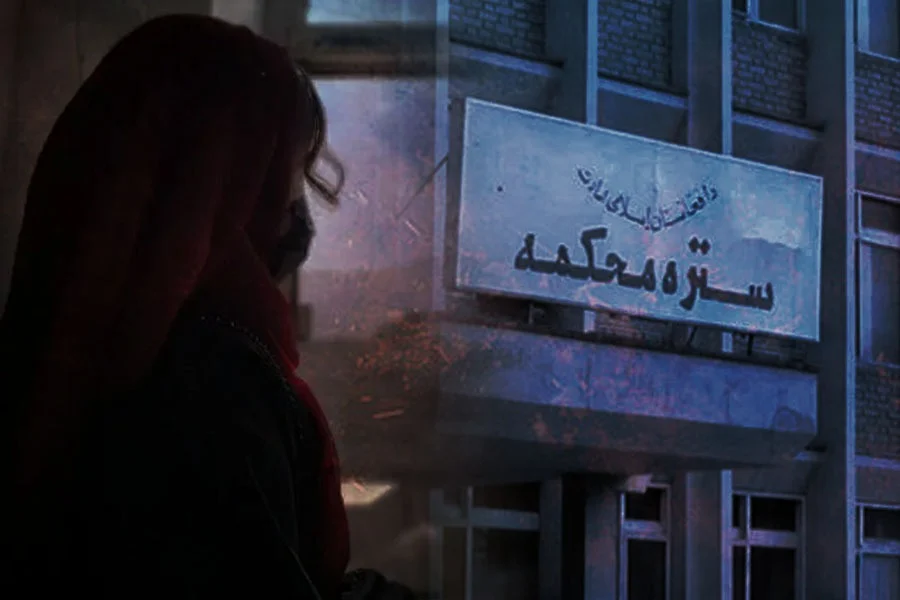
Afghan women whose divorce applications have been rejected by Taliban courts say judges often decided their cases without giving them enough opportunity to explain the violence and other problems they faced at home.
Some of the women say they approached the courts after suffering severe domestic abuse, but instead of receiving protection or seeing complaints against their husbands investigated, they were urged by Taliban judges to obey their spouses and remain in their marriages.
One woman, identified by the pseudonym Samira, says she reached a Taliban court with visible injuries and expected the judge to address the violence she had suffered. She says the judge saw burn and beating marks on her body but blamed her for provoking her husband.
According to Samira, the judge told her that she could either continue living with her husband or spend several months in prison so that she would learn to appreciate him.
Samira says her divorce request was rejected and that the violence against her subsequently intensified. She says her husband has repeatedly threatened to report her to the Taliban and have her imprisoned if she refuses to comply with his demands.
She says her husband is addicted to drugs and, after losing his job, began selling household possessions to pay for drugs. According to her account, attempts to stop him led to repeated beatings.
Samira alleges that she suffered two miscarriages during the violence. She says she was severely beaten after refusing to give her husband a gold earring and was injured with an electrical cable and hot water. She says burn marks remain on her hands and legs and that her husband continues to beat her with sticks, electrical cables, fists and kicks.
“I can’t take this anymore. I don’t know how much longer I can endure it,” she says.
Another woman, identified as Soheila, says her divorce request was also rejected by a Taliban court. She says she has three children and that her husband sometimes leaves the home for days or weeks without explanation.
Soheila says she works and pays for her children’s living expenses, while conflicts frequently erupt when her husband returns. She alleges that both she and her children have been subjected to violence.
She says that when she asks her husband to contribute to the children’s expenses or questions his prolonged absences, he beats her. She also alleges that he sometimes hits the children with his hands or objects nearby.
Soheila says she went to court to learn about her legal rights but was not given enough time to explain her circumstances. Instead, she says, the judge instructed her to obey her husband.
When she attempted to speak about her problems, she says the judge told her: “You are a woman and you are still talking? You are not allowed to say anything.”
“I studied and I know what my rights are,” she says. “I was silent until now so people would not talk behind my back, but I cannot remain silent anymore. I don’t know where to go, what to do or whom to ask for help.”
The accounts could not be independently verified, and the Taliban have not been quoted responding specifically to the allegations made by these women.
Shaharzad Akbar, the former chair of Afghanistan’s Independent Human Rights Commission, says Taliban courts do not operate on the premise that their primary objective is to protect women and safeguard their human and religious rights.
Akbar argues that the Taliban’s approach is instead centered on controlling society, protecting male interests and preventing women from challenging the group’s orders. She says the Taliban view certain forms of women’s behavior as contributing to the breakdown of families, a perspective that influences their handling of family disputes.
She also says Taliban regulations governing separation between spouses have made divorce more difficult for women. According to Akbar, women face restrictions when approaching courts, have limited access to legal representation and are required to discuss their problems with male judges.
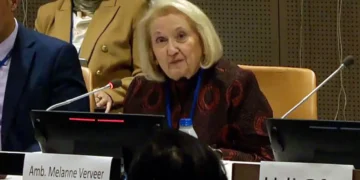
Human Rights Watch has previously raised similar concerns. Heather Barr, the organization’s associate women’s rights director, criticized the Taliban’s “Principles of Separation of Spouses,” saying the rules can make it difficult for women to obtain separation even in circumstances involving a missing husband, abandonment or domestic violence.
Under the regulations, which were approved by Taliban leader Hibatullah Akhundzada, women’s ability to obtain separation in many circumstances is tied to a Taliban judge’s decision, the husband’s consent, an admission, witnesses or an oath.
The accounts of Samira and Soheila point to a broader problem than the rejection of individual divorce applications. For women attempting to escape violent marriages, the absence of an effective and accessible judicial route can eliminate one of the few formal avenues for seeking protection.
From Nimruz’s perspective, the central concern is therefore not simply whether a court grants or rejects a divorce. It is what happens when a woman alleging serious abuse enters the justice system and emerges with fewer options for leaving the relationship safely. If allegations of violence are not meaningfully investigated and judicial pressure instead pushes women toward continued obedience, a court decision can have consequences beyond the legal case itself—potentially returning women to the same environment in which they say they were already at risk.
The issue also raises a wider question about access to justice under the Taliban: when women lack meaningful legal representation and must bring claims before male judges within a system governed by rules that make separation difficult, the formal existence of a court does not necessarily translate into an effective path to protection.