
Russia says regular communication between its security and intelligence institutions and their US counterparts remains active despite deep political and security tensions, underscoring the importance both sides place on preventing disputes from escalating unexpectedly.
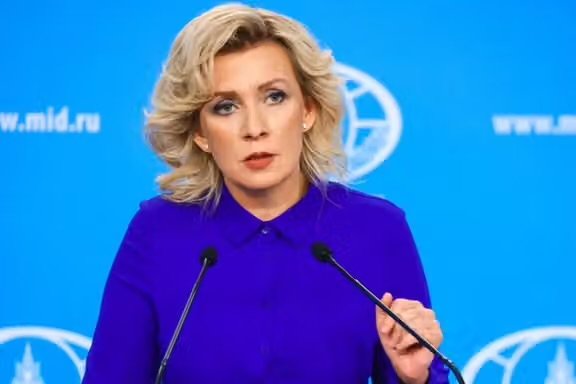
Maria Zakharova, spokesperson for Russia’s Foreign Ministry, said specialized and security agencies from Russia and the United States continue to communicate regularly at the working level.
According to Zakharova, the main purpose of these contacts is to prevent further escalation and address issues that are important to both countries.
She said the contacts are planned and work-oriented, adding that both Moscow and Washington have an interest in maintaining them.
“These contacts are planned and working in nature, and both sides are interested in maintaining them,” Zakharova said.
She added that the communication is not limited to intelligence services and also involves other specialized institutions dealing with issues of mutual concern.
Zakharova’s remarks came a day after Russian President Vladimir Putin said Moscow remained ready to restore relations with Washington fully. He said communication between the two countries was continuing through several channels, including intelligence services and representatives of the administration of US President Donald Trump.
Relations between Russia and the United States have remained deeply strained in recent years, particularly because of the war in Ukraine, extensive Western sanctions against Moscow and broader security and political disputes.
Despite those tensions, the continued operation of direct security channels provides both sides with a mechanism for communicating sensitive messages without relying entirely on public statements or diplomatic exchanges.
These contacts do not, by themselves, indicate that Russia and the United States are moving toward political reconciliation. Their significance is more immediate: maintaining communication can help reduce the risk of miscalculation, clarify intentions during crises and manage disputes before they escalate.
The development also highlights a broader feature of relations between major powers. Even when political dialogue is severely restricted, security institutions may retain practical channels because the consequences of a breakdown in communication can be considerably greater.
From Nimruz’s perspective, the most important element is therefore not the existence of dialogue itself, but the fact that Moscow and Washington continue to recognize the need for direct communication despite their wider confrontation. These channels could become particularly important if a new security crisis emerges or if the two governments eventually seek to expand their discussions beyond technical and intelligence matters.
The real test will be whether these working-level contacts remain limited to crisis management or eventually create enough space for broader political engagement. For now, the evidence points to continued communication between rivals, not normalization of their relationship.